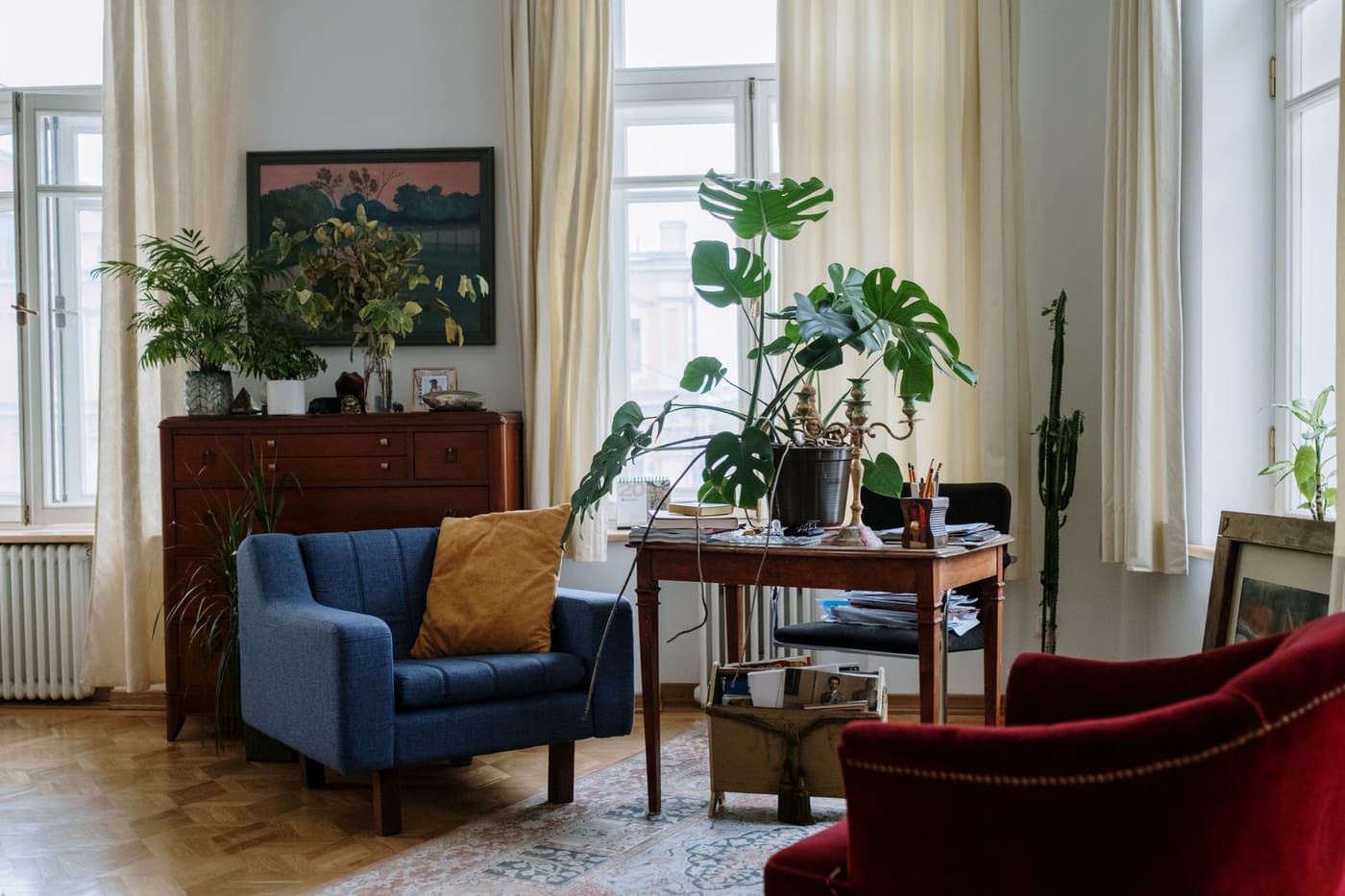
A small apartment feels chaotic when too many different colors, shapes, and objects compete for attention within one line of sight. You calm it by clearing most horizontal surfaces, matching the containers and materials you keep on display, hiding utility items, and limiting each room to a small set of colors.
This is not the same as owning less. Two apartments with identical belongings can feel completely different depending on how those items are grouped, stored, and shown. Visual chaos is about the number of separate things your eye has to sort, so the approach is to reduce the count of visible “units” and make the remaining ones look related.
Understand what the eye actually counts
Your eye does not count objects the way you do. It counts distinct shapes, colors, and edges. Ten books in matching bindings stacked together read as one block. Ten random items scattered across a shelf read as ten.
That means you can often cut visual noise without throwing anything away:
- Group items into clusters instead of spreading them out.
- Put things in matching containers so they merge into one shape.
- Reduce the number of colors in view.
- Remove stray items from the floor, the backs of chairs, and the tops of appliances.
Think in terms of “visible units.” A bathroom counter holding a toothbrush cup, a soap pump, a tray with three products, and nothing else has about four units. The same counter with fifteen bottles and tubes has fifteen.
Clear the surfaces first
Horizontal surfaces collect clutter and are also what you see most. Start there.
- Pick one surface at a time. Begin with the kitchen counter, coffee table, or desk.
- Remove everything. Wipe the surface clean.
- Put back only what you use daily. Everything else goes into a drawer, cabinet, or box.
- Limit what stays. A common target is leaving about one third to half of each surface empty.
- Repeat for the next surface over several days.
Items that are not used daily but still need to be accessible can go into closed storage near where they are used. Seasonal items, extra supplies, and rarely used appliances can move to a closet or under-bed bins.
If you cannot find a place for something, that is a signal. Either it belongs in a donation bag, or you need a storage solution. The guide to organization systems that work in small apartments helps with the second case.
Match containers and materials
Mismatched storage is a major source of visual noise. Cardboard boxes, grocery bags, assorted baskets, and half-open plastic bins each have their own color and shape.
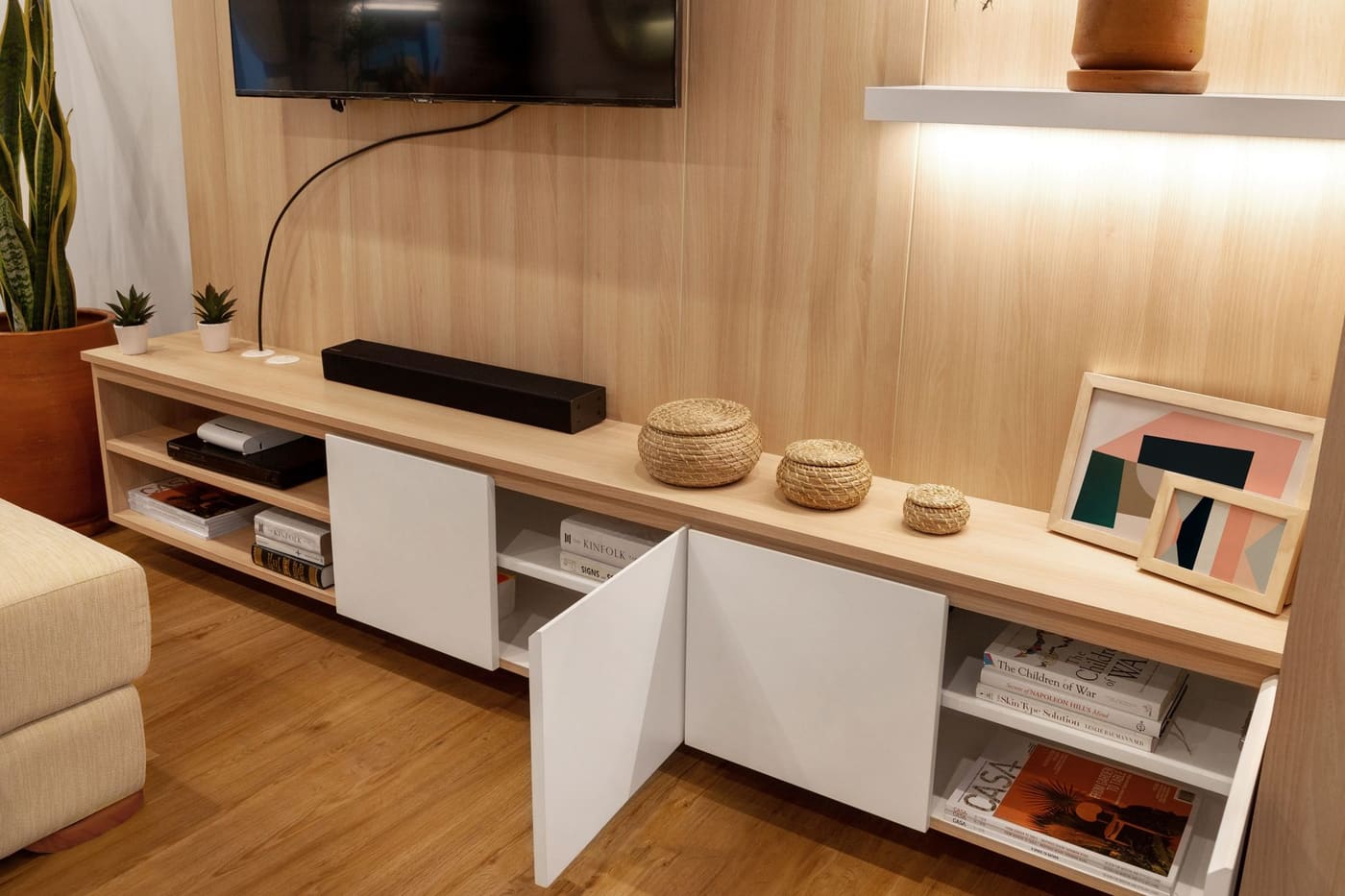
A few uniform containers do more than a lot of clever ones. Choose from one or two families:
| Container type | Good for | Typical cost |
|---|---|---|
| Woven or fabric baskets, same color | Throws, toys, tech items | $10 to $30 each |
| Opaque lidded bins | Closet shelves, under-bed | $8 to $25 each |
| Matching glass or ceramic jars | Kitchen staples, bathroom items | $5 to $20 each |
| Uniform hangers | Closets | $15 to $30 for a set of 30 to 50 |
Uniform hangers are an inexpensive upgrade that is easy to overlook. A closet with 40 identical slim hangers looks calmer than one with a mix of wire, plastic, and wood.
Repeat materials across the room too. If your furniture is light wood, choose one or two other woods in a similar tone, plus one metal finish such as matte black. Mixing four wood tones and three metals multiplies the number of visual “voices.”
Limit the color palette
Color is the loudest source of noise. A simple structure helps:
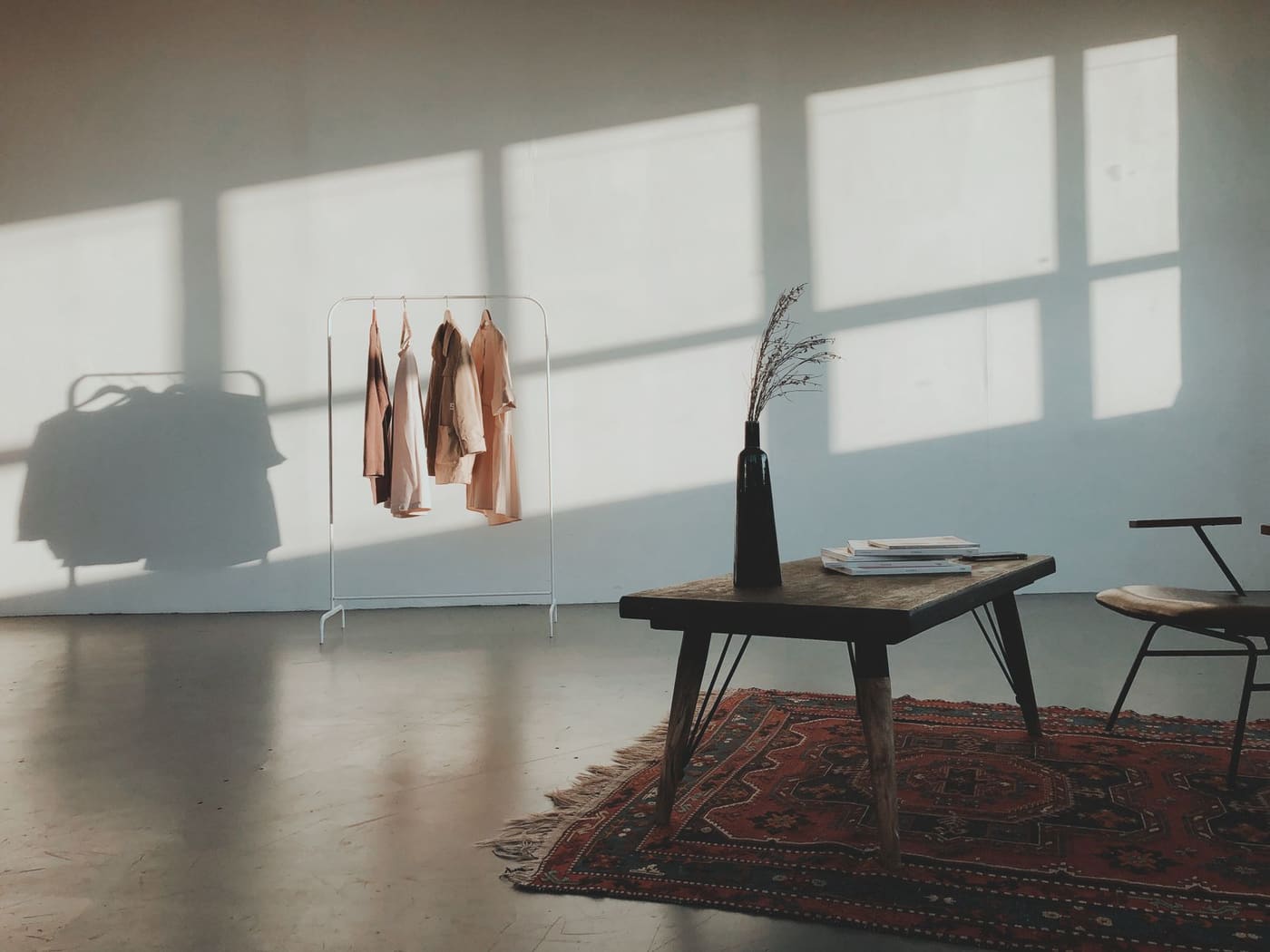
- One main neutral for walls, large furniture, and window coverings.
- One supporting color for textiles and secondary pieces.
- One accent color for small objects, repeated three or more times.
Look at the whole room, and then squint. If a single object stands out and does not relate to anything else, it is a candidate for removal or relocation. Bright packaging is a common culprit, since cereal boxes, cleaning bottles, and shampoo labels all add loud color. Storing them inside cabinets removes that noise. If you decant products into plain containers, label them clearly and never put cleaning chemicals in food or drink containers.
Patterns follow similar rules. A room can hold one or two patterns if they differ in scale. Several patterns of similar size, like a striped rug, plaid throw, and floral curtains, feel busy.
Hide the utility items
Some things have no attractive form. Cables, chargers, trash cans, cleaning supplies, laundry, and bags are functional and eye-catching. Give them homes out of sight:
- Cables: Adhesive cable clips, a cord cover along the baseboard, or a cable box over a power strip. Do not cover power strips or bundle cords in a way that traps heat, keep strips unobstructed, and never run cords under rugs, since that is a fire and trip risk.
- Trash and recycling: Use a closed or lidded can, or keep it inside a cabinet.
- Laundry: A lidded hamper in the closet or a tall fabric hamper in a corner.
- Bags and coats: Wall hooks, a coat rack, or an over-the-door organizer, so they stay off chairs.
- Cleaning supplies: Under the sink in a small bin, not on counters.
A tray can also corral items that must stay out. Keys, a candle, and a small bowl on a tray read as one object.
Control the floor and the walls
The floor is the base of the room. If it is crowded with shoes, bags, baskets, and cords, everything above feels crowded too. Keep the floor as open as possible, and limit what rests on it to furniture, a rug, and perhaps one basket.
On walls, avoid scattering many small items at different heights. Instead:
- Hang fewer, larger pieces.
- Align frames on common lines, either the top edge or the center.
- Leave blank wall between groups of items.
- Use removable adhesive hooks rated for the weight in a rental, and follow your lease on holes, since terms and local law vary.
An overloaded wall can be fixed by taking half of it down and storing the rest for rotation. Similarly, an overloaded bookshelf looks calmer when some shelves are left partly empty, and books are arranged by color or size rather than random order.
Furniture and layout
Too many pieces in a small space produce visual clutter even when the pieces are tidy. Check the count of furniture items, and consider whether each one is doing a job. Furniture with legs, open frames, or clear lines looks lighter than bulky, boxy pieces. Where you can, choose pieces with built-in storage, such as a bed with drawers or an ottoman with a lid, so fewer storage items fill the room.
For layout and scale decisions, see how to make a small apartment feel bigger. For decorating while keeping some personality, read how to decorate an apartment without making it feel cluttered.
Maintain calm with a few habits
Visual calm slips back unless you keep it up. A few light habits help:
- A one-in, one-out rule: When something new comes in, something leaves.
- A five-minute evening sweep: Return things to their places and clear surfaces.
- A designated landing spot: A tray or hook by the door catches keys, mail, and bags.
- A monthly edit: Walk through each room, and remove anything you no longer use or like.
- A donation bag: Keep one in the closet, and add to it as you notice items.
If mail and paper stack up, sort it the day it arrives, since paper piles are a very common source of visual clutter.
A fast test for any room
Take a photo of the room and view it in black and white. Without color, you see shapes and contrast more clearly. Spots where dark objects sit against light walls, or where many small items cluster, show up fast. Remove or group those first. Then look at the photo again and see whether your eye has one place to rest. This simple check works on a single shelf or a whole living room and costs nothing.
Where this comes from
This guide is based on widely published interior design and home organization guidance about grouping, repeating materials, and limiting color, plus common-sense household safety. These are rules of thumb, not tested standards, so adjust them to your own space. The cord and power strip warnings reflect general consumer electrical safety advice. Prices are rough US ranges and change, so check current prices before you buy.