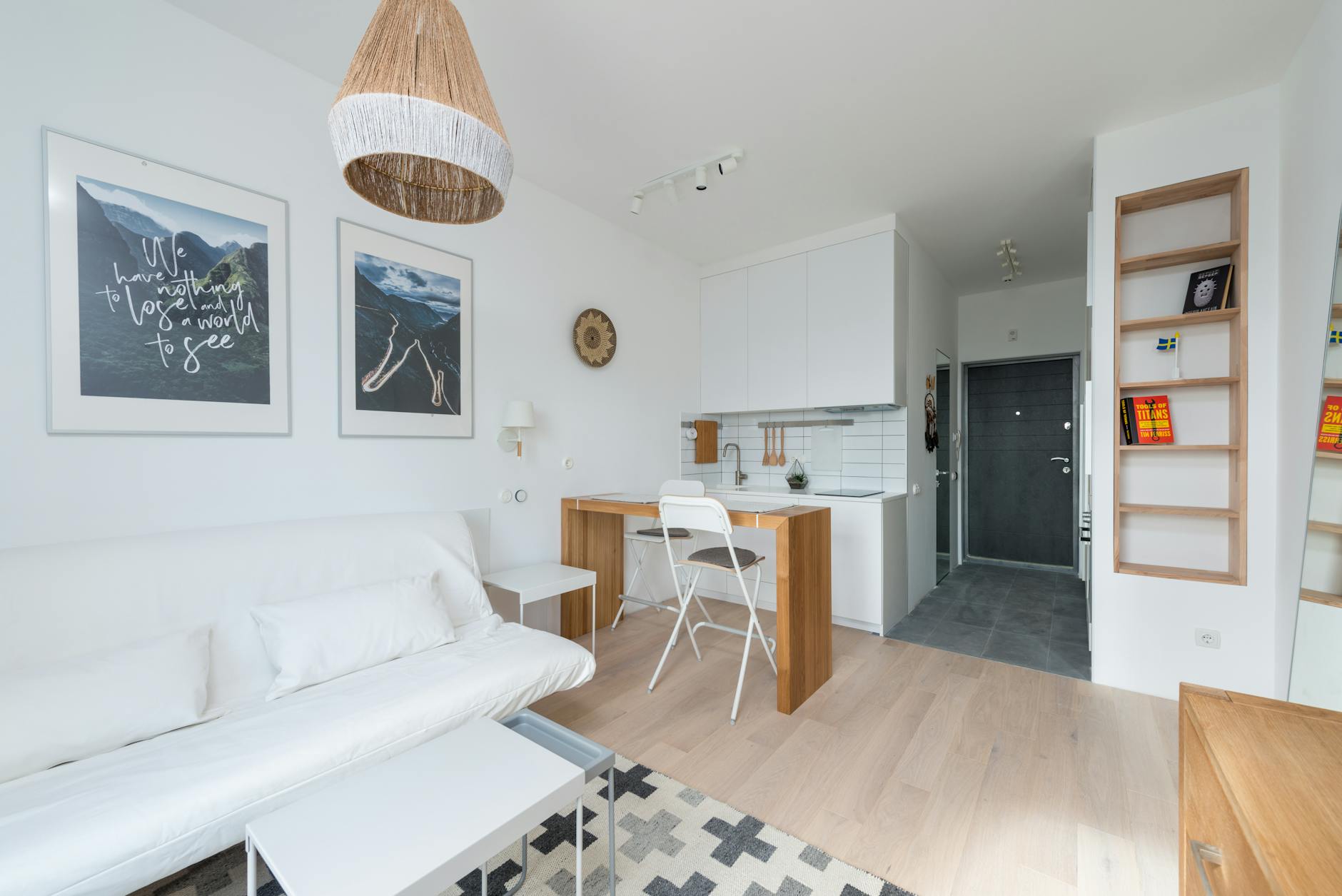
A small apartment feels bigger when you can walk through it without turning sideways, see across it without hitting clutter, and light the whole room instead of one corner. Square footage cannot change, but pathways, furniture scale, light, and the amount of stuff in your line of sight can, and those four things drive most of the “cramped” feeling.
Most people try to fix a small space by adding things: a mirror, a rug, a new organizer. The faster route is usually subtraction and rearrangement. The sections below start with the changes that cost nothing and move toward small purchases, so you can stop when the room feels right.
Fix circulation before anything else
Circulation is the path you take from the door to the bed, the kitchen, the couch, and the bathroom. When that path zigzags around furniture, the room reads as tight even if it is not.
As a rough guide from common interior design rules of thumb, aim for a clear walking path of about 30 to 36 inches (75 to 90 cm) through the main routes. Around a bed, 24 inches (60 cm) on the sides you use is a common minimum. Between a sofa and coffee table, about 14 to 18 inches (35 to 45 cm) is a typical suggestion. These are guidelines, not code requirements, so trust how the room feels when you walk it.
A quick test:
- Walk from the entry to every main area, carrying a laundry basket.
- Note each spot where you turn, squeeze, or bump something.
- Move or remove the item causing it, or turn it 90 degrees.
Often the fix is small. Pushing a sofa flush to the wall, swapping a door-blocking chair for a narrow bench, or making sure doors can swing fully open recovers a surprising amount of usable floor. If you are unsure about layout, sketch the room on graph paper with each square equal to 6 inches and cut out paper shapes for furniture. It takes 20 minutes and costs almost nothing.
Scale furniture to the room
Oversized furniture is the most common reason a small apartment feels smaller. A deep, overstuffed sofa can take 38 to 40 inches of depth. An apartment-scale sofa often runs 30 to 34 inches deep and 70 to 80 inches long, which still seats two or three people.
Look at these dimensions before you buy or keep a piece:
- Depth: shallower pieces keep the walkway open.
- Leg height: furniture raised on visible legs, around 6 inches or more, lets you see floor underneath, which makes the room read as larger.
- Arm style: slim or track arms use less width than rolled, padded arms.
- Visual weight: open-frame chairs and tables look lighter than solid blocks.
For more on which pieces earn their footprint, see what furniture is actually worth it in a small apartment. Fewer, right-sized pieces usually beat many small ones, because a crowd of small items creates more visual breaks than a few larger ones.
Use light to make walls feel farther away
Light changes how deep a room feels. Dark corners seem to close in, while an evenly lit room seems to extend to its edges.
Layer your lighting
A single overhead fixture flattens a room and leaves shadows in the corners. Aim for three light sources at different heights:
- A floor lamp in a corner, which brightens the ceiling line.
- A table lamp or wall sconce at eye level.
- A task light where you work, cook, or read.
Warm-white bulbs, roughly 2700K, feel comfortable in living areas. Cooler 3000K to 4000K bulbs suit kitchens and desks. Using the same color temperature across the room keeps it feeling like one space instead of separate zones.
Let in what daylight you have
Hang curtains high and wide, with the rod a few inches above the window frame and extending 6 to 10 inches past each side. When open, the curtains then sit mostly off the glass, so the window looks bigger and the opening lets in more light. Sheer panels diffuse light while keeping privacy. Do not stack plants or tall furniture in front of the only window.
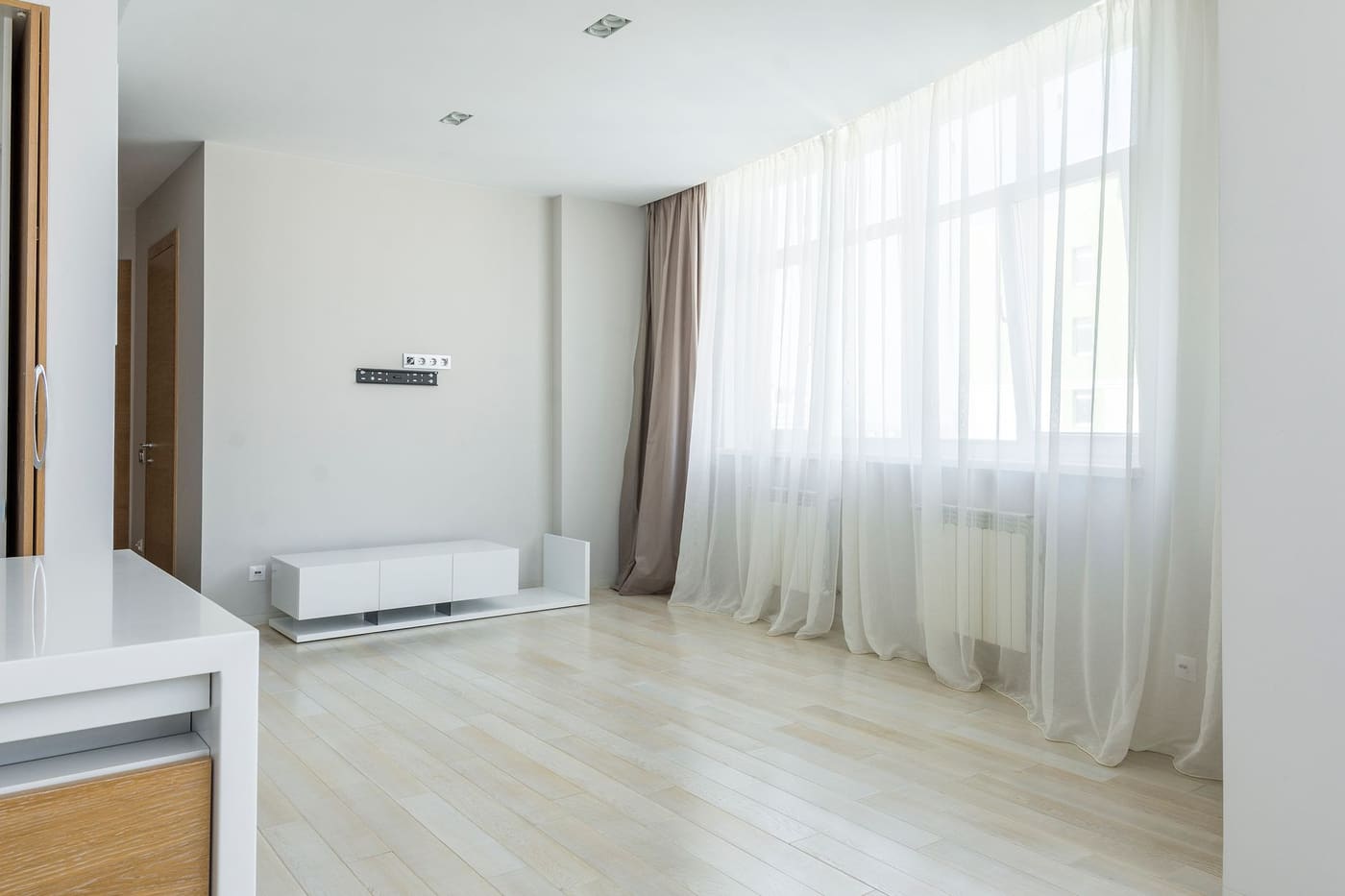
A mirror placed opposite or beside a window can bounce light deeper into the room. It helps most when it reflects something pleasant, such as the window or a lit area, instead of a pile of clutter.
Choose a calm, limited color palette
You do not need all-white walls, and in a rental you may not be allowed to paint. What matters is limiting contrast and color count. When walls, large furniture, and textiles share similar tones, the eye reads fewer edges and the room feels continuous.
A workable approach is to pick one main light neutral, one secondary tone, and one or two accent colors. Keep the largest items, like the sofa, rug, and curtains, in the main neutral range, and let smaller objects carry the accents. Painting the ceiling a very light color, if allowed, can also help. In a rental, check the lease before painting, and ask about repainting requirements first.
Edit what is in your line of sight
Visual clutter shrinks a room faster than physical clutter. Ten small objects spread across a shelf read as ten separate things the eye has to process. Grouping them into three cohesive sets reads as calm.
Try these edits:
- Clear half of every horizontal surface. Keep the other half for items you use daily.
- Move small appliances, cables, and chargers behind doors or into baskets.
- Use matching containers for loose items so shelves look uniform.
- Keep the floor clear. Every bag, shoe pile, or basket on the floor makes the room feel smaller.
If the problem is a general sense of noise, the article on stopping a small apartment from feeling visually chaotic covers editing in more depth.
Use vertical space, but keep it light
Drawing the eye upward makes ceilings feel higher. Tall bookcases, wall shelves, and hung curtains all help. The risk is overloading the wall, which makes the room feel heavy.
A few guidelines:
- Hang curtain rods close to the ceiling line or within a few inches of it.
- Choose one tall storage piece rather than several short ones, and anchor it to the wall to prevent tipping, which the US Consumer Product Safety Commission recommends for tall furniture.
- Leave some wall blank. A wall with one large piece of art reads as calmer than one with a dozen small frames.
- Hang art with its center around 57 to 60 inches (145 to 150 cm) from the floor, which is a common eye-level guideline.
In a rental, use removable adhesive strips for light frames, and check the weight rating on the package. Heavy shelves or mirrors should go into studs or use proper wall anchors. Read your lease first, because many require repair of holes at move-out, and terms and local law vary.
Define zones without building walls
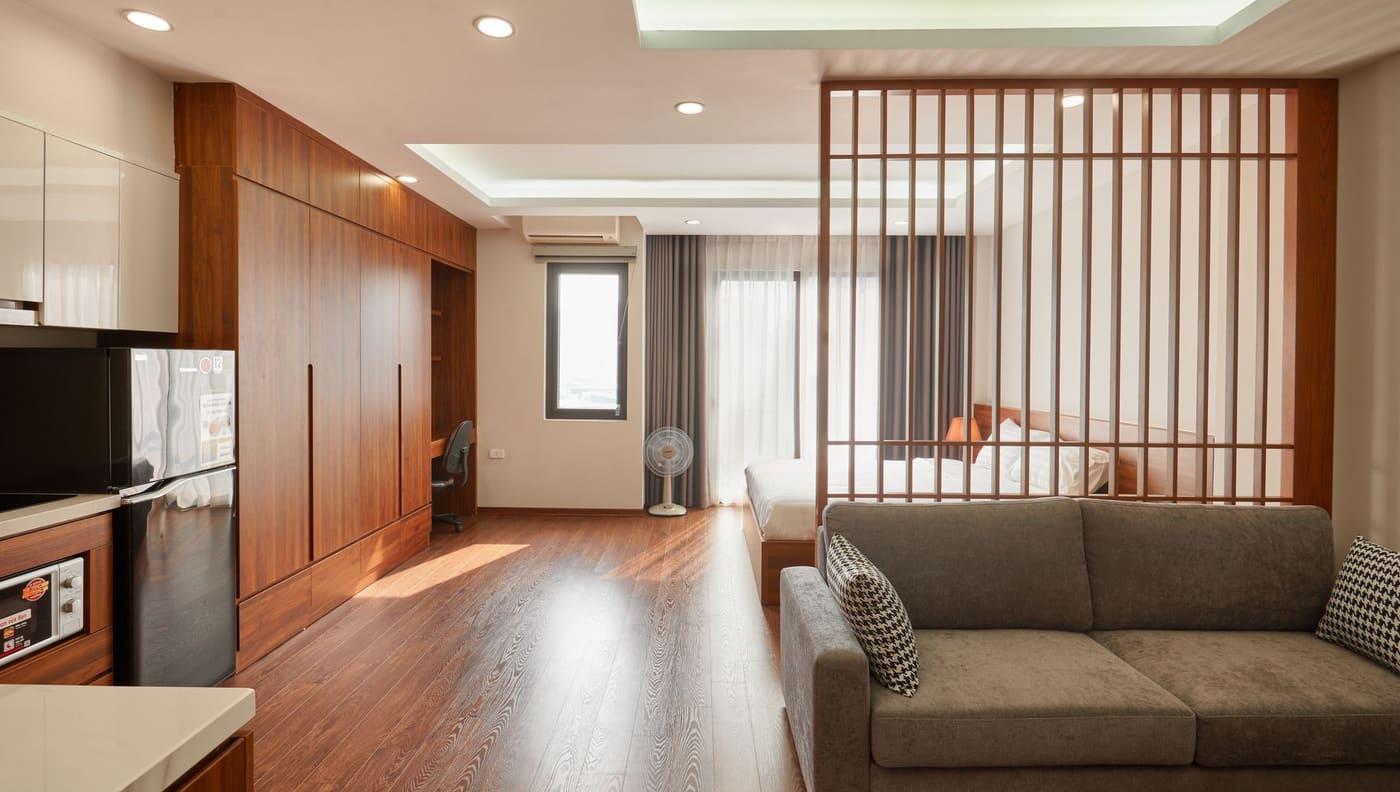
In a studio or open-plan unit, a room without boundaries can feel like one big muddle. Light zoning gives each activity a place, which makes the space feel organized and therefore larger.
| Method | Typical cost | Good for |
|---|---|---|
| Area rug under the seating group | $50 to $300 | Separating living area from sleeping area |
| Open shelving unit as a divider | $60 to $250 | Separating bed from living space without blocking light |
| Different lighting per zone | $20 to $100 per lamp | Marking a desk or reading corner |
| Curtain on a ceiling track | $40 to $150 | Hiding a sleeping area when needed |
Choose open or half-height dividers over solid walls, since they keep light and sight lines moving.
Common mistakes that shrink a room
- Pushing every piece against the wall. In very small rooms it often works, but floating a sofa an inch or two off the wall can sometimes help, and pulling furniture away is not always better. Test both.
- Buying a rug that is too small. A rug that only fits under the coffee table chops the floor up. A larger rug, such as 5 by 8 feet, ties the seating together.
- Too many small decor items. Collections look good when grouped, and messy when scattered.
- Heavy window coverings. Dark, thick drapes that stay closed make the room feel like a cave.
- Ignoring storage. If belongings have no place, they migrate onto surfaces and the floor. A solid plan from organization systems that work in small apartments prevents that.
A one-weekend plan
If you want a fast sequence, try this: on Saturday morning, clear paths and move furniture to fix circulation. Midday, remove half the items from every surface and put them into a box. Afternoon, swap in warm bulbs and add one lamp. On Sunday, rehang curtains higher and wider and rearrange shelves into groups. Live with the result for a week before buying anything, and unpack the box only for items you actually miss. Most people find they miss very little, and the room feels noticeably lighter without a major purchase.
To see how much floor your furniture takes up, try the floor footprint and walkway calculator.
Where this comes from
The anchoring advice reflects the US Consumer Product Safety Commission’s Anchor It campaign for tall furniture. The distances for walkways, beds, curtains, and art height are common interior design rules of thumb rather than legal or tested standards. The layout, lighting, and editing tips are based on widely published design guidance and common sense. Prices are rough US ranges and change, so check current prices before you buy.