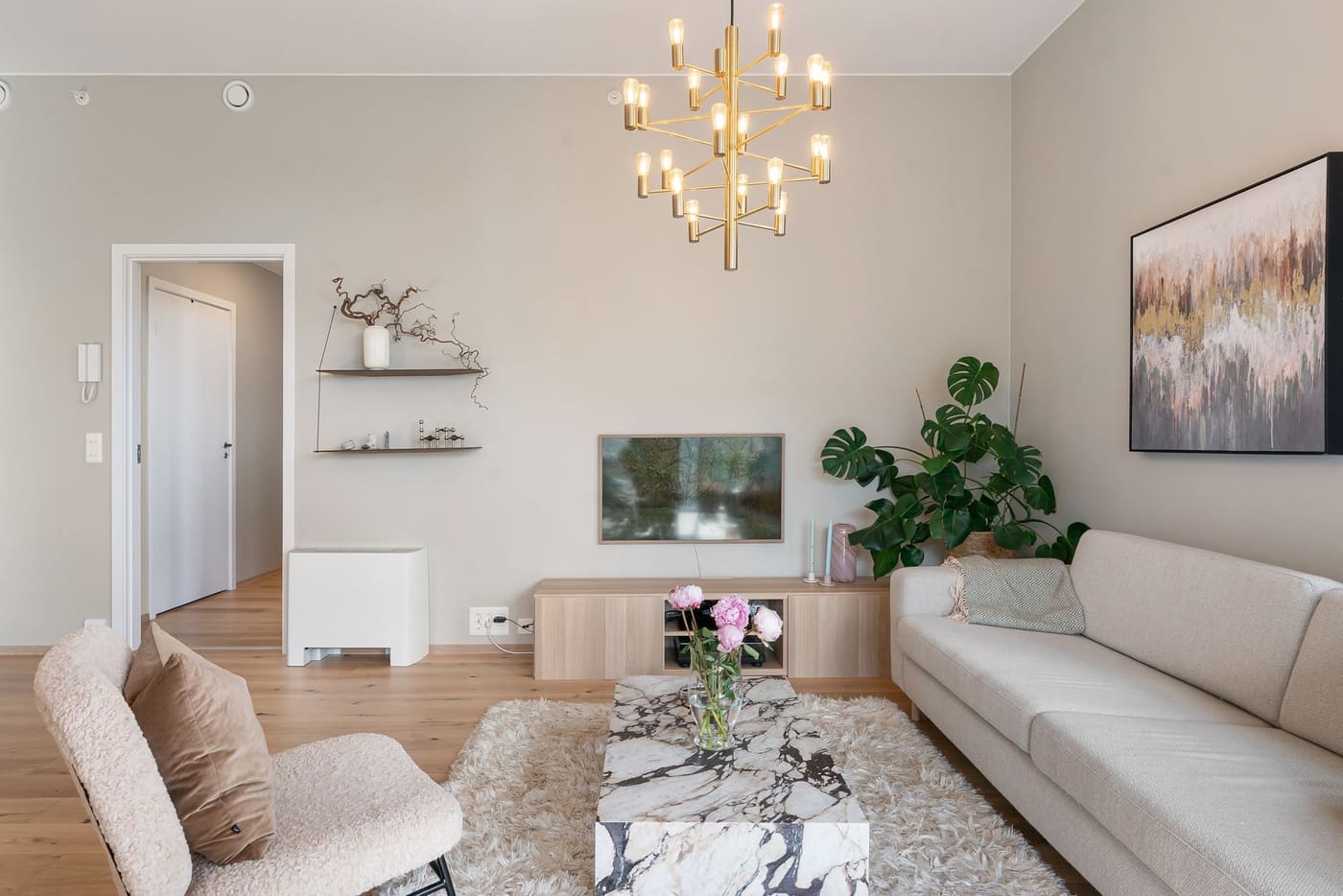
You decorate an apartment without clutter by choosing a few anchor pieces, repeating a small set of colors and materials, and leaving deliberate empty space around what you display. Personality comes from lighting, texture, and a handful of meaningful objects, not from filling every shelf and wall.
Clutter in decor usually comes from too many unrelated small items competing for attention. The fix is not a bare, rented-showroom look. It is an approach with a few rules: decide where the eye should land, limit your palette, and let every object either earn its spot or go. Here is how to do that room by room, with ideas that work in a rental.
Start with one focal point per room
A room feels cluttered when everything has equal visual weight. Pick one place for the eye to land and style around it.
Good focal points in an apartment include:
- A large piece of art above the sofa or bed.
- A statement lamp or a well-shaped plant in a corner.
- A bookcase styled with intention.
- A single bold textile, such as a patterned rug or a throw.
Once you choose, keep the surrounding pieces quieter. If the art is colorful, keep the pillows, throw, and curtains in simpler tones. If you want a patterned rug, choose a plain sofa. The rule of thumb is that one element can be loud, and the rest support it.
In a studio, you may need two focal points, one for the living area and one for the sleeping area. Keep them different in scale so they do not compete.
Limit your palette and repeat it
A tight palette makes a room look planned even if the items came from different stores. Choose:
- A base neutral for large items: walls, sofa, curtains. White, cream, gray, or beige all work.
- A secondary tone for medium items: rugs, bedding, a chair. This can be a deeper neutral or a muted color.
- One or two accents for small items: pillows, art, ceramics.
Then repeat each color at least twice in different parts of the room. Repetition ties spaces together. A blue vase on the shelf, blue in the art, and a blue pillow on the sofa feels intentional. Three unrelated colors scattered once each looks random.
Materials follow the same logic. Pick two or three, such as light wood, matte black metal, and linen or cotton, and repeat them across furniture, frames, and lamps.
Add warmth with light, not more objects
Lighting is the cheapest way to make an apartment feel finished. Many rentals come with a harsh overhead fixture that makes everything look flat. Turn it off more often and add lamps.
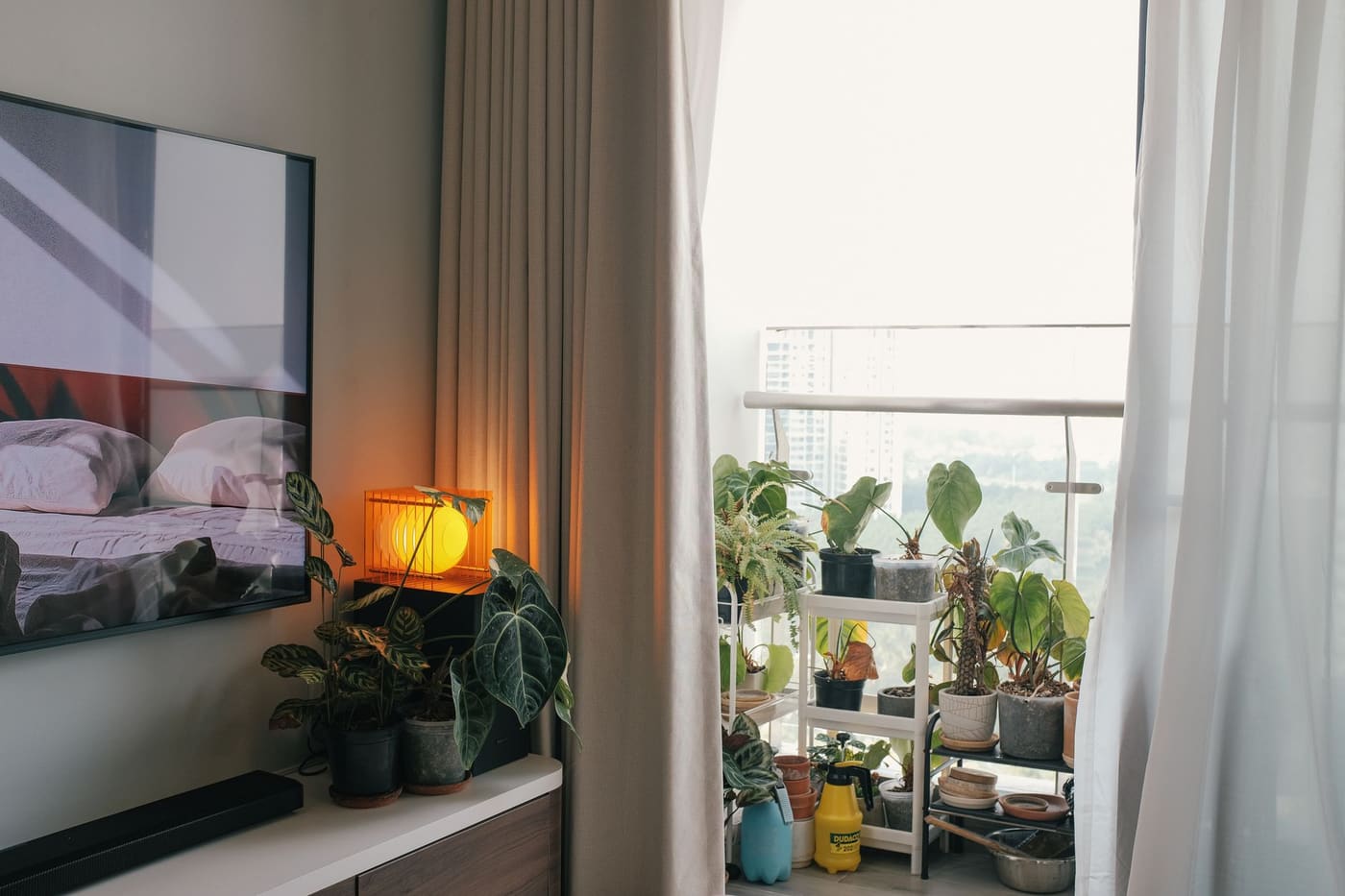
- Use warm-white bulbs, around 2700K, in living and sleeping areas.
- Place lamps at different heights: a floor lamp, a table lamp, and perhaps a small accent light on a shelf.
- Use dimmable bulbs or a plug-in dimmer if you want to adjust mood. Check that the bulb is rated dimmable.
- Choose plug-in wall sconces with a cord cover when you cannot hardwire anything.
Replacing a bulb or plugging in a lamp is safe for most renters. Do not rewire a fixture, open a ceiling box, or install hardwired lights yourself. That is electrician or landlord work, and a lease may forbid changes. Lamps and plug-in sconces usually cost $20 to $80 each and give you most of the effect with none of the risk.
Use texture for depth
Texture adds visual interest without adding objects. Mixing several textures in a neutral room often makes it feel richer than adding color.
Combine soft, rough, and smooth surfaces. A linen sofa cover, a chunky knit throw, a jute or wool rug, a wooden tray, and a ceramic lamp base each add a different feel. Aim for about three to five textures in a room, and keep them in the same color family so the room stays calm.
Plants are an easy texture source too. One or two medium plants usually look better than six small ones, and a single larger plant fills the corner and reduces the need for more decor. Choose plants that suit your light, since a struggling plant looks worse than none.
Style shelves and surfaces with restraint
Shelves, dressers, and coffee tables collect clutter fastest. A simple formula keeps them under control.
The three-item rule
Group items in odd numbers, usually three, with variation in height. For example, on a coffee table: a tray, a small plant, and a candle or book stack. On a console: a lamp, a bowl, and one framed piece.
Leave gaps on shelves
On open shelves, one common rule of thumb is to fill roughly half to two thirds of each shelf and leave the rest empty. Treat the number as a starting point and adjust by eye. Mix books stacked horizontally and vertically, and put a small object on top of a horizontal stack.
Rotate rather than accumulate
Keep a box of decor in a closet. Swap items seasonally instead of leaving everything out. Rotation gives you variety without crowding.
Hang art and mirrors thoughtfully
Walls covered in many small frames can read as noise. Fewer, larger pieces are calmer.
| Approach | Best for | Notes |
|---|---|---|
| One large piece | Above sofa or bed | Aim for roughly two thirds to three quarters of the furniture width |
| Gallery wall | Larger blank walls | Use matching frames and even spacing, about 2 to 3 inches between frames |
| Leaning art | Rentals, shelves, dressers | No holes needed, easy to change |
| Mirror | Dark rooms or entries | Place to reflect light, not clutter |
A common guideline is to hang art with its center around 57 to 60 inches from the floor, low enough that it relates to the furniture below, with about 6 to 10 inches of gap above a sofa. In a rental, use removable strips rated for the weight, and test on an inconspicuous spot. Check your lease before drilling. Lease terms and local deposit law vary, so small holes may be allowed in one place and charged for in another.
Hide the necessary clutter
Not everything can be pretty. Cables, cleaning supplies, mail, and remotes all look messy when exposed. Instead of leaving them out, give them a home:
- Lidded baskets or boxes for remotes, chargers, and throws.
- A cable box or a few adhesive clips to tame cords.
- A tray by the door for keys and mail.
- Closed storage or a curtain for supplies under the sink and on open racks.
The best decor often looks good because the ugly items are out of view. For ideas on structuring that storage, read about organization systems that work in small apartments. If the problem feels more like a general sense of visual noise, see how to stop a small apartment from feeling visually chaotic.
Budget and renter-friendly priorities
You do not need to spend much. A reasonable order of spending is:
- Lighting: $40 to $150 for two or three lamps and warm bulbs.
- A rug of the right size: $100 to $400, often the biggest visual change.
- Curtains hung high and wide: $50 to $150.
- One large piece of art or a mirror: $40 to $200.
- Plants and small accents: $20 to $80.
Items you can take with you when you move are the best investment in a rental. The article on renter-friendly upgrades that are actually worth it goes deeper on what to prioritize.
A quick edit routine
Once a month, stand in the doorway of each room and look for the first thing your eye snags on. If it is a pile, find it a home. If it is an object you no longer like, remove it. Take a photo of the room, since photos often reveal clutter that you stop seeing in daily life. Keep a donation bag in the closet so removal takes a few seconds, and avoid buying new decor until the current pieces feel settled. Ask whether a new item fits your palette and has a spot waiting for it. If it does not, skip it. This habit keeps decor from slowly expanding into every free inch, and it costs nothing.
Where this comes from
This guide is based on widely published interior design rules of thumb, such as limiting a palette, repeating materials, layering light, and the common 57 to 60 inch art-hanging height. These are guidelines for taste and comfort, not tested standards, so adjust them to your room. The lighting safety advice reflects general consumer guidance to leave wiring to a licensed electrician and to check bulb ratings on the lamp. Prices are rough US ranges and change, so check current prices before you buy.