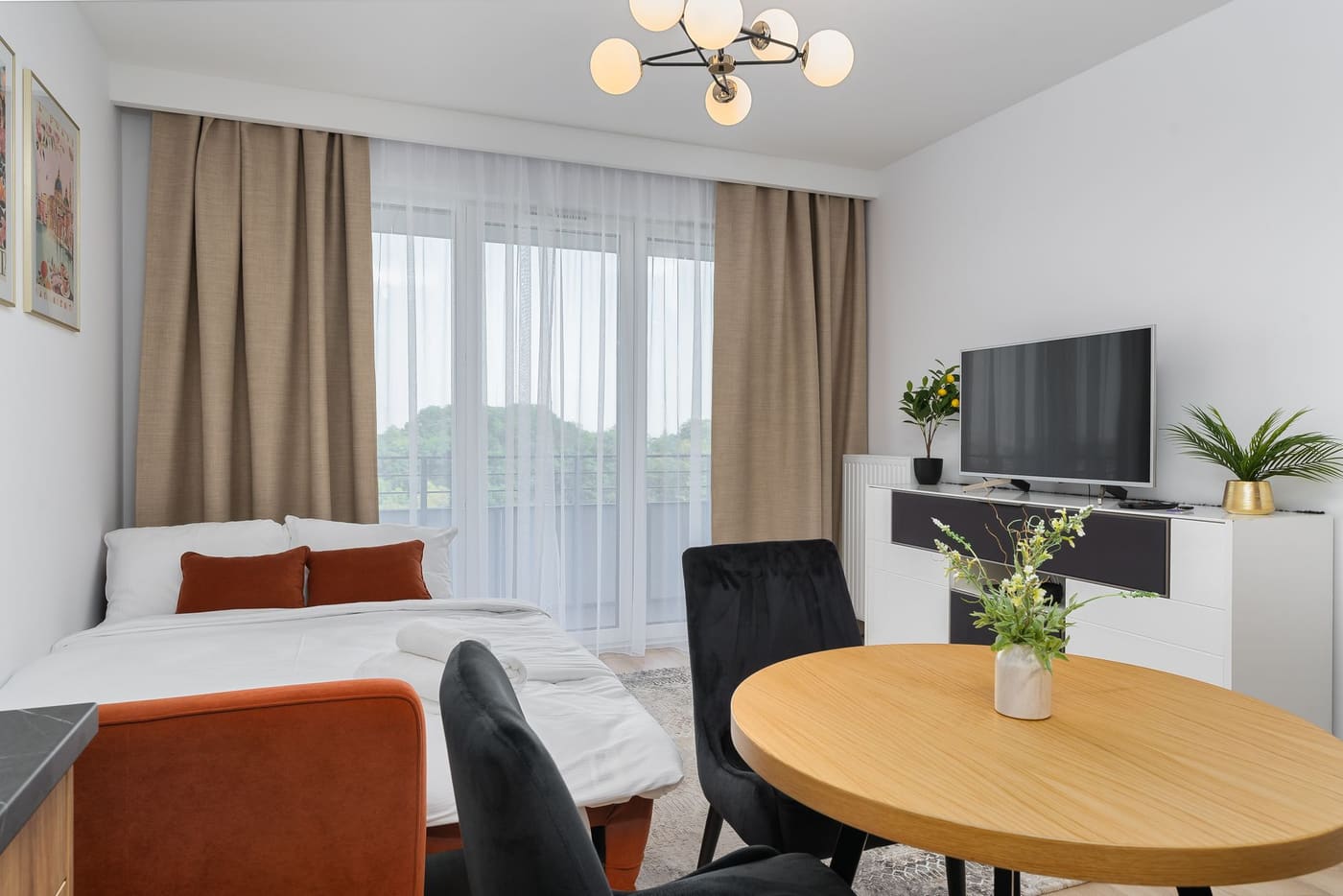
The furniture worth buying for a small apartment is a comfortable bed, a right-sized sofa or loveseat, a dining or work surface that serves both purposes, and storage pieces that hold things inside instead of on top. Each should pass one test: does it solve a daily problem for the floor space it takes?
Furniture is the biggest cost and the biggest footprint in an apartment, so mistakes are expensive. A piece that looks great online can block a doorway, eat a whole wall, or serve only one rare purpose. The sections below rank what tends to earn its space, what to be skeptical of, and how to measure before you buy.
Measure first and set a footprint budget
Before you shop, measure the room, doors, hallways, stairwells, and elevator. Many pieces fail because they never fit through the entrance. Write down:
- Room dimensions and window and door positions, including how far doors swing.
- The width and depth of any spot you want to fill.
- The narrowest point on the delivery route, such as a stairwell turn or door frame.
Then mark the footprint on the floor with painter’s tape and leave it for a day or two. Walk around it. If the taped rectangle blocks a path or makes you turn sideways, the piece is too big. Also keep clear walking paths of about 30 to 36 inches through main routes, and check the layout advice in how to make a small apartment feel bigger.
The bed: worth spending on
Because you use it every night, the bed and mattress deserve the largest share of your budget. In a small bedroom, the main choices are:
| Option | Pros | Cons | Typical cost |
|---|---|---|---|
| Platform bed with drawers | Hidden storage, no box spring | Heavier, harder to move | $350 to $1,200 |
| Simple frame with under-bed bins | Flexible, cheaper | Bins need a lid and a routine | $150 to $600 plus bins |
| Daybed or sofa bed | Doubles as seating | Less comfortable for nightly sleep | $250 to $900 |
| Murphy or wall bed | Frees the whole floor | Needs wall mounting, usually not allowed in rentals | $1,500 and up |
For most renters, a platform bed with drawers or a frame high enough for bins is the practical pick. Wall beds involve structural installation and are usually inappropriate in a rental, so skip them unless your landlord approves and a professional installs them.
Allow about 24 inches on the sides you use. A queen mattress is 60 by 80 inches, a full is 54 by 75, and a twin is 38 by 75. If a queen leaves you with no walking room, a full may be the better choice.
The sofa: size it down, not out
Many people buy a sofa for a larger room than they have. In a small living area, consider:
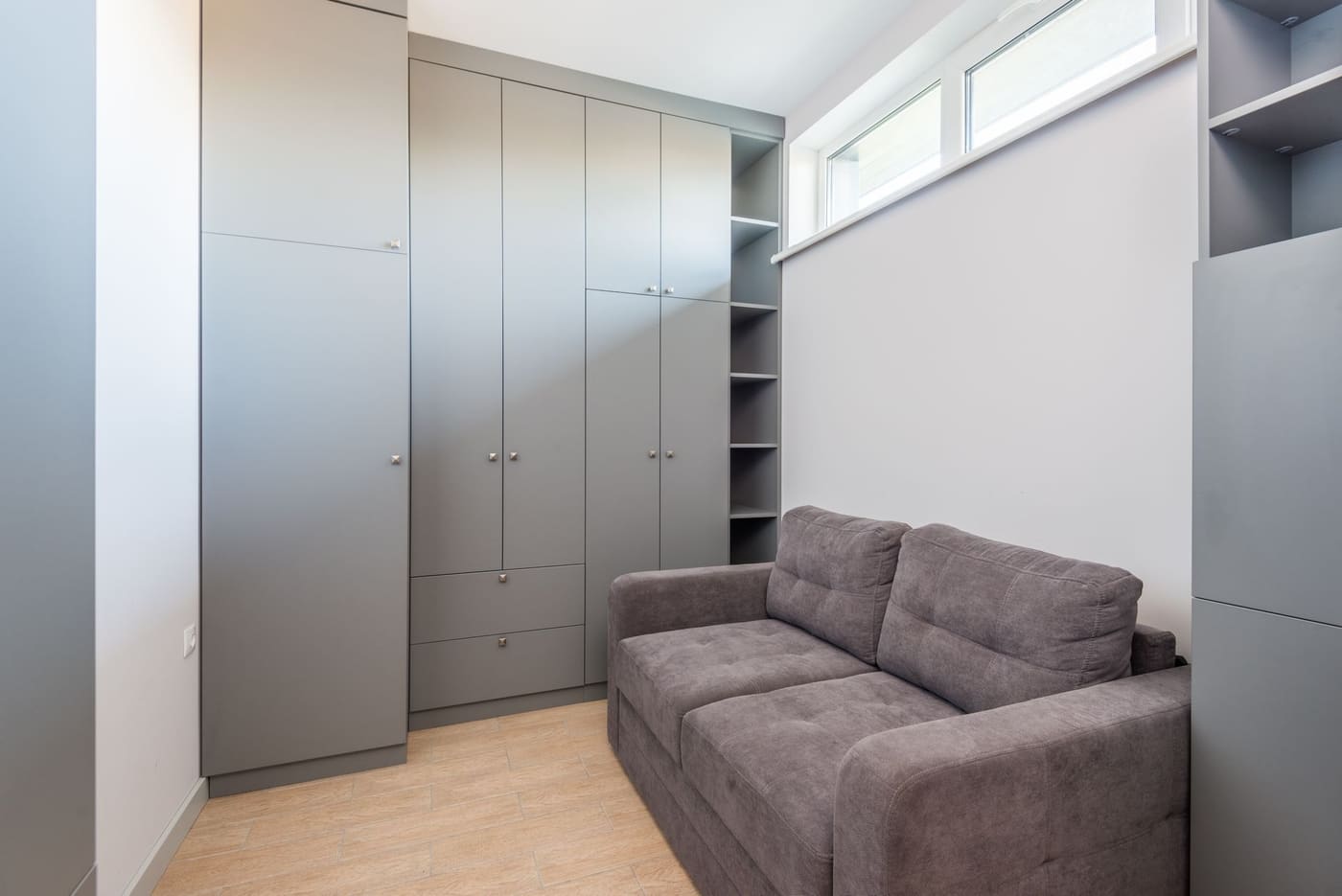
- A loveseat or apartment-size sofa, usually 60 to 75 inches wide and 30 to 34 inches deep.
- Raised legs of about 6 inches so the floor shows underneath.
- Slim or track arms that do not waste width.
- A removable, washable cover if you have pets or kids.
A sofa bed can be worth it if you host guests a few times a year, but check the quality, because inexpensive models tend to have uncomfortable mattresses. A good alternative is a loveseat plus a folding mattress or an inflatable mattress stored in a closet, which costs less and saves the footprint all year.
Sectionals are risky in small rooms unless the room is at least wide enough to leave a clear path around them. A chaise portion can take a lot of space.
Tables that do double duty
A dining table that is used twice a day is a poor use of space in a small apartment, but a table that also serves as a desk, prep surface, and craft area is worth it.
Good options include:
- A drop-leaf or gateleg table that folds to as little as 12 to 15 inches wide when not in use.
- A round table with a pedestal base, which has no corners to bump and tucks into tight spots.
- A narrow console at 12 to 16 inches deep that serves as a desk or a drop zone.
- A bar-height counter or peninsula with stools that tuck underneath.
- Nesting tables instead of one coffee table, which you can separate for guests and nest away.
A coffee table with lift-up top or lower shelf can double as a desk and storage, though lift-top mechanisms vary in quality, so test them in person if possible.
Storage furniture that earns its spot
Storage furniture is worth it when it holds things inside and has a clear category to store. Examples:
- Tall, narrow bookcases that use wall height. Anchor them to the wall to prevent tipping. The US Consumer Product Safety Commission recommends anchoring furniture, and it runs its Anchor It campaign because tip-overs injure people, especially children. Anti-tip devices are inexpensive, and a federal standard now covers tip-over stability for clothing storage units such as dressers.
- A storage ottoman or bench for blankets, shoes, or board games, working as seating too.
- A dresser with deep drawers that replaces a closet if closet space is short.
- A closet organizer with a double hanging rod, which can nearly double hanging capacity at a lower price than new furniture. Many kits cost $30 to $150 and need no tools.
- A narrow shoe cabinet at the entry.
Before buying any storage piece, count what needs to go in it. If you have no plan for what will fill each shelf, you may be buying a clutter container. The guide to organization systems that work in small apartments helps you decide what you need.
Pieces to be skeptical of
Some popular small-apartment furniture often fails in daily life:
- Single-purpose accent chairs that nobody sits in and that block a path.
- Large decorative consoles or sideboards in a room with no wall to spare.
- Bulky entertainment centers. A wall-mounted TV or a low, slim stand usually does the job.
- Complex transformer furniture with many hinges and parts, which tends to be fussy and wears out. If a piece needs to be reconfigured every day, you will probably stop doing it.
- Low-quality “multifunction” items whose parts feel flimsy. A table that wobbles or a bed that creaks will annoy you daily.
- Glass-heavy or mirrored pieces that show every fingerprint, though glass and open frames can visually lighten a room.
A rule that helps: if you cannot name the daily task a piece performs, it is probably decor and not furniture. Decor is fine, but it should not take priority over function.
Quality, cost, and where to save
Not everything needs to be expensive. A reasonable split:
- Spend more on: the mattress, the sofa (since you sit on it daily), and the desk chair if you work from home. A decent desk chair typically costs $150 to $400.
- Save on: bookcases, side tables, nightstands, and bins, where simple designs work and secondhand options are plentiful.
- Buy secondhand for: solid wood dressers, tables, and bookcases, which often last for decades. Inspect for stability, drawer function, and signs of pests. Be careful with secondhand upholstered pieces and mattresses, since bed bugs can travel in them, and many people skip used mattresses entirely.
Assembly matters too. Many flat-pack pieces need to be tightened after a few weeks, and the wall-anchor hardware included with tall pieces should always be used. In a rental, ask whether the lease allows anchoring to the wall, and patch small holes at move-out if required. Lease terms and local law vary.
If you rent and expect to move, favor pieces that disassemble easily and fit standard door sizes. Door widths vary, and some apartment doors are narrow, so measure yours and favor pieces that fit through a 30-inch opening or that disassemble.
Use the “one in, one out” test and a priority order
If you are furnishing from scratch, buy in this order so the most important things come first:
- Bed and mattress.
- A place to sit that you like.
- A table that serves for eating and working.
- Storage for the things that currently live on the floor.
- Lighting and rugs.
- Everything else.
Live with the basics for a few weeks before buying more. You will find out what the apartment really needs, and the list of what you want often gets shorter. For renters fixing the biggest problems first, what renters should fix first in an apartment lays out a sensible sequence.
Check the return policy
Because fit is hard to judge from a listing, look at the return policy, restocking fees, and who pays for return shipping before you order large items. Heavy pieces can cost $100 or more to ship back, and some retailers do not accept opened mattresses. Keep packaging until you are sure the piece fits and works, and test the room with the item in place for a few days. Buying a trial period often matters more than a small price discount.
To check what fits before you buy, use the floor footprint and walkway calculator and small-space furniture buying guide.
Where this comes from
The anchoring and tip-over advice comes from the US Consumer Product Safety Commission’s Anchor It campaign and its information on the federal stability standard for clothing storage units. Mattress and bed dimensions are standard US sizes. Walkway clearances and sofa proportions are common interior design rules of thumb, not tested standards. Prices are rough US ranges and change, so check current prices and return policies before you buy.