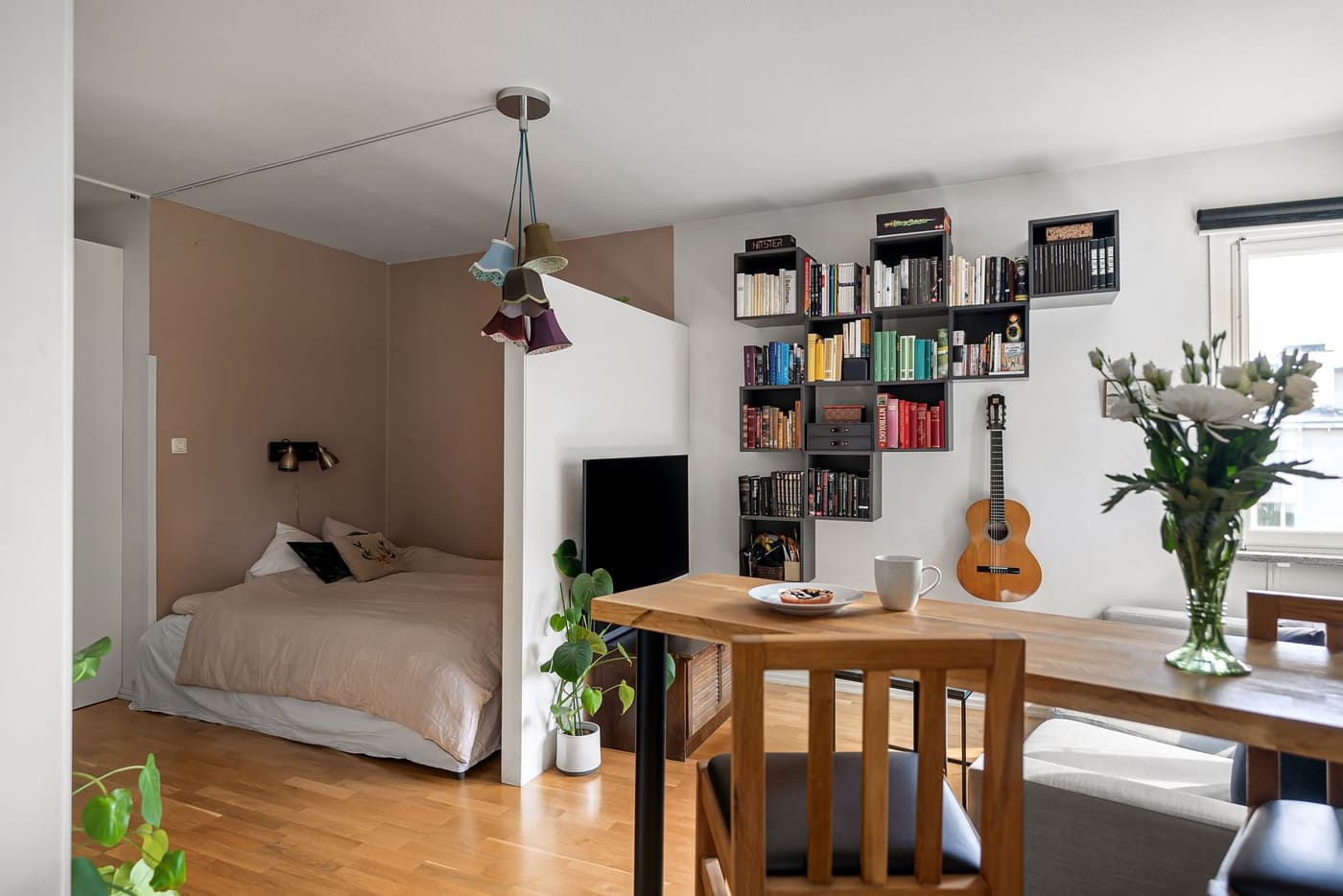
Renters should first fix anything that affects safety or the lease, then the daily annoyances: bad lighting, no landing spot at the door, missing storage, poor sleep, and a layout that blocks movement. Those changes cost the least and improve the most hours of your week. Decor and paint come last.
It is tempting to start with the visible stuff, like art, throw pillows, or a new accent wall. But an apartment that is dim, loud, or hard to keep tidy will feel bad no matter how it looks. The order below puts essentials first, then comfort and function, then style, with typical costs and where a landlord or professional should take over.
Step 1: Document the condition and handle safety items
Before you change anything, protect yourself and your deposit.
- Photograph and video every room on move-in day, including walls, floors, appliances, and any damage. Date-stamp them and email a copy to the landlord or property manager.
- Test smoke and carbon monoxide detectors. Press the test button. The National Fire Protection Association recommends testing smoke alarms every month. Report missing or non-working units in writing. Many places require them, and rules vary by locality.
- Check locks, windows, and exits. Confirm that exterior door locks and window latches work and that nothing blocks the way out.
- Look for water and mold signs. Check under sinks, around the toilet base, and in corners for stains or dampness.
- Check for pests. Look for droppings or signs in the kitchen and bathroom.
Report anything unsafe or broken to the landlord in writing and keep a copy. Do not attempt repairs on electrical, gas, plumbing supply lines, or heating systems yourself. Responsibility for these repairs depends on your lease and local law, and in many places the landlord is responsible for them, so ask before attempting anything yourself. If you smell gas, leave the building and call the gas utility or emergency number from outside.
Step 2: Fix the lighting
Lighting is the quickest improvement to how an apartment feels. Rentals often have a single overhead fixture, dim bulbs, or a dark corner.
- Buy two or three lamps for the living area and one for the bedroom.
- Use warm-white bulbs, about 2700K, in living and sleeping spaces, and a brighter 3000K to 4000K at the desk and in the kitchen.
- Add a plug-in under-cabinet LED strip if kitchen counters are dark.
- Place a small lamp or night light in the hallway or bathroom.
Typical cost is $60 to $200 for the full set. Replacing bulbs with LED versions of the correct base and wattage rating is simple, but modifying fixtures or wiring should be left to the landlord or an electrician. Lighting ideas are covered in more detail in what renter-friendly upgrades are actually worth it.
Step 3: Create a landing zone at the entry
If keys, bags, shoes, and mail end up on the nearest surface, the apartment looks messy within days. A landing zone fixes that.
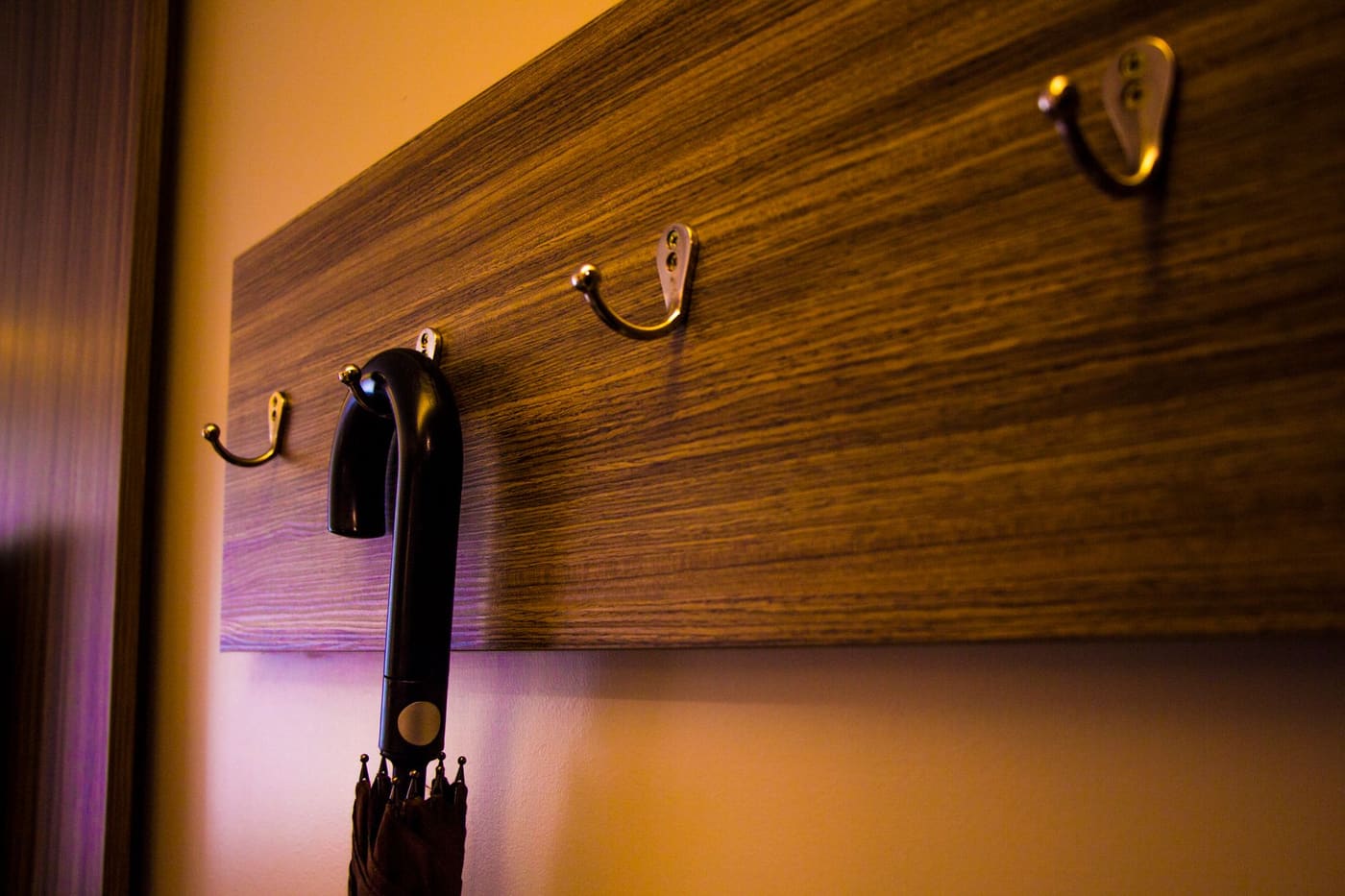
- Hooks: One for each person’s bag and coat. Use adhesive hooks rated for the weight, or an over-the-door set.
- A tray or bowl: For keys, wallet, and earbuds.
- A shoe mat or small rack: Holds two to four pairs.
- A mail slot or basket: Sort and recycle junk mail at once.
This costs roughly $20 to $60 and is among the highest-impact changes you can make. The same issue is discussed in why your apartment gets messy so fast.
Step 4: Improve sleep conditions
You will notice sleep quality every single day.
| Problem | Fix | Typical cost |
|---|---|---|
| Light from outside | Blackout curtains or a sleep mask | $20 to $100 |
| Noise | Rug, door sweep, white noise machine or fan, earplugs | $10 to $60 |
| Uncomfortable mattress | Mattress topper | $60 to $250 |
| Too hot or cold | Fan, weatherstripping, layered bedding | $15 to $60 |
| Dry air | Humidifier, cleaned per the manual | $25 to $80 |
Adhesive weatherstripping and door sweeps are removable and cheap. If a bedroom window will not close properly or the heating or cooling does not work, tell the landlord, because those are repair issues and not decor problems.
Step 5: Add storage where things pile up
Look at where clutter forms and put a home there. Common storage gaps and low-cost fixes:
- Closet too small: Add a double-hang rod or hanging shelves, $15 to $50.
- Kitchen cabinets crowded: Use shelf risers and drawer dividers, $10 to $40.
- No pantry: A freestanding rack or a tall shelf, $40 to $120.
- Bathroom cramped: Over-the-toilet shelf or a no-drill shower caddy, $20 to $50.
- Nowhere for off-season items: Low bins under the bed, $15 to $40 each.
Buy after measuring, and only after you have decluttered what you do not need. For help planning storage, see organization systems that work best in small apartments. Anchor tall shelving to prevent tipping, and check what your lease says about wall anchors.
Step 6: Fix the layout and flow
Many apartments feel awkward because the furniture came from somewhere else and was placed wherever it fit. Try these tests:
- Walk the main routes, such as door to bed, kitchen to couch, and bed to bathroom. Remove anything that makes you turn or squeeze.
- Make sure doors open fully and drawers pull out without hitting furniture.
- Place seating where it can face a wall, a window, or the TV without blocking a path.
- Put a desk near natural light, but not where the glare hits the screen.
Rearranging is free and reversible. If furniture does not fit the space, consider selling it and buying scale-appropriate pieces, as covered in what furniture is actually worth it in a small apartment.
Step 7: Reduce cleaning and maintenance friction
Make the apartment easier to keep clean, since a hard-to-clean place gets dirtier faster.
- Put a doormat at the entry and take shoes off.
- Use a shower squeegee and run the bathroom fan after showers to help limit mildew.
- Keep a spray, cloths, and a small vacuum or broom in reach.
- Use drain catchers to prevent clogs, about $3 to $8.
- Replace the HVAC filter if the landlord says it is your responsibility, using the size printed on the existing filter and the date schedule it recommends.
Report leaks, clogs that do not clear, and persistent mold to your landlord. Never mix different drain cleaners or mix bleach with ammonia or acids. Open a window and wear gloves with strong cleaners.
Step 8: Then add comfort and style
Once the basics work, focus on the things that make the apartment feel like yours. Good candidates:
- A rug of the right size, $100 to $400.
- Curtains hung high and wide, $30 to $120.
- A few plants suited to your light, $10 to $50 each.
- One large piece of art or a mirror, $40 to $200, hung with removable strips or leaned.
- A throw and pillows for texture.
Skip permanent changes, such as painting or installing fixtures, unless the landlord approves in writing. In a building built before 1978, avoid sanding or scraping old paint because of possible lead, and ask the landlord about it.
Set a budget cap
Give the first round of fixes a firm limit, such as $150 to $300, and spend it in the order above, so decor does not eat the money meant for blackout curtains or a better lamp. Wait two weeks between rounds and let the apartment show you what is still annoying.
Before you move out, work through the renter move-out photo checklist.
Where this comes from
The smoke alarm testing advice comes from the National Fire Protection Association. The advice to report problems in writing and to leave repairs to the landlord or a licensed professional reflects general tenant guidance; responsibilities, required alarms, and repair timelines depend on your lease and local law, so check yours or ask a local tenant resource. Costs are rough US ranges and change, so check current prices before you buy.