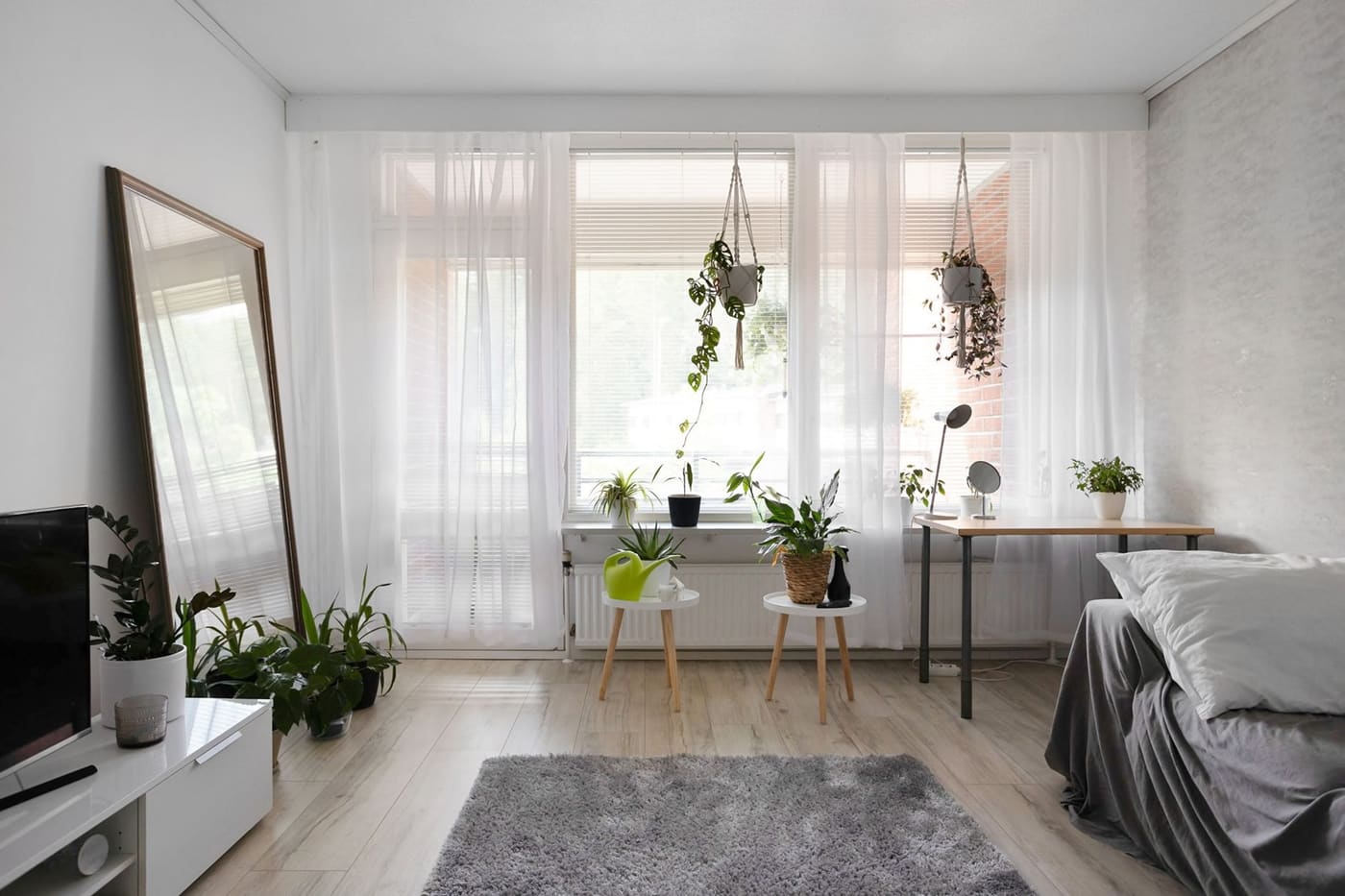
The renter upgrades most worth paying for are better lighting, extra storage, comfort items such as a good mattress topper or curtains, and removable hardware swaps you can take with you. Each solves a daily annoyance, costs little, and leaves no damage to repair at move-out. Cosmetic changes that cannot travel with you are usually not worth the money.
A useful way to judge any upgrade is to ask three questions: will you notice it every day, can you take it with you or undo it fully, and does it cost less than what you would lose in a deposit deduction. This article sorts upgrades into the ones that pass, the ones that depend, and the ones to skip, with typical US price ranges.
How to judge a renter upgrade
Use a quick filter before buying:
- Daily impact. Will you use or notice it every day? Better light at your desk beats a fancy backsplash decal.
- Portability. Can it move to your next place? Lamps, rugs, and curtains can. A painted accent wall cannot.
- Reversibility. If it stays, can it be fully undone in an hour without damage?
- Cost per month of use. A $60 item you use for 24 months costs $2.50 a month.
- Lease compliance. Many leases limit painting, nails, and hardware changes, and lease terms and local law vary. Read yours, and ask the landlord in writing when unsure.
Anything that fails two or more of these is a bad candidate. If your main concern is where to begin, what renters should fix first in an apartment puts these upgrades in a sequence.
Lighting: the highest return
Rentals often come with a single harsh ceiling fixture. Replacing the light itself is hard to do without an electrician, but you can change the experience easily.
- Lamps. Two to four lamps with warm-white bulbs, around 2700K, usually transform a room. Typical cost is $20 to $80 per lamp.
- Smart or dimmable bulbs. A dimmable bulb costs about $5 to $15, and a color-adjustable smart bulb about $10 to $25. Confirm the lamp or fixture supports the bulb type and wattage.
- Plug-in wall sconces. These need no wiring and often cost $30 to $80. Use a cord cover or clips to hide the cord.
- Under-cabinet LED strips. Adhesive or plug-in strips for dark kitchen counters, about $15 to $40.
- Bulb swaps in existing fixtures. Changing to LED bulbs of the right base and wattage often lowers the energy bill and improves the light. Use the maximum wattage on the fixture label.
Do not open ceiling fixtures, replace switches, or modify wiring yourself in a rental. Wiring is a licensed electrician’s job, and the landlord should approve and arrange it. Always turn off a lamp and let bulbs cool before changing them.
Storage and organization: practical and portable
Storage upgrades usually pay off quickly because they remove daily friction.
| Upgrade | Typical cost | Damage risk |
|---|---|---|
| Closet double-hang rod | $15 to $40 | None |
| Over-the-door hooks and racks | $10 to $30 | None |
| Shelf risers for cabinets | $10 to $30 | None |
| Tension rod under sink or in shower | $8 to $20 | None |
| Freestanding shelving unit | $40 to $200 | Low if anchored lightly or not at all |
| Adhesive hooks | $5 to $15 | Low, check weight rating |
Tall freestanding shelves can tip, so use the anti-tip kit if you can, or place heavier items low. If the lease prohibits wall anchors, choose shorter units. For help choosing systems, see organization systems that work best in small apartments.
Window treatments and rugs
Curtains and rugs often make the most visible change for the price, and both are fully portable.
- Curtains. Hang a rod a few inches above the window frame and wider than the opening to make the window look larger. Blackout curtains help bedrooms. Typical cost is $30 to $120 per pair.
- Tension or no-drill curtain rods. If you are not allowed to drill, a tension rod works for lighter curtains in a recessed window.
- Cellular or adhesive window film. Frosted privacy film in a bathroom or ground-floor window costs about $10 to $25 and peels off, though it can leave residue on old glass, so test a small corner.
- Rugs. A rug of the right size, often 5 by 8 or 8 by 10 feet in a living room, adds warmth and sound dampening and covers worn flooring. Typical cost is $100 to $400. Add a non-slip pad, and ensure it is not a trip hazard at doorways.
Hardware, fixtures, and small swaps
Some small replacements can be done by a renter safely, and you should keep the originals to restore at move-out.
- Cabinet knobs and pulls. Swap with a screwdriver, keep the old ones in a labeled bag. Cost is $2 to $8 per piece. Measure the hole spacing before buying.
- Showerhead. A new one that screws onto the existing pipe by hand or with a wrench can improve comfort. Wrap the threads with plumber’s tape, and keep the original. Leaks can become your responsibility, so tighten carefully and check for drips. Typical cost is $15 to $50.
- Faucet aerator. Replacing it is simple and cheap.
- Toilet seat. A slow-close seat is a $20 to $50 swap that you can take with you.
- Door stops, hooks, and cable management. Small but frequent annoyances that cost a few dollars to solve.
Anything that involves cutting into a wall, replacing a faucet, working with water lines, or touching electrical or gas should go to the landlord or a licensed professional. A tiny drip can become water damage that you could be charged for.
Comfort upgrades that move with you
Daily comfort often matters more than looks.
- A mattress topper, usually $60 to $250, can make a rental mattress more comfortable.
- A good desk chair, often $150 to $400, if you work from home.
- A fan, a small space heater with tip-over protection, or a portable air conditioner, subject to building rules and electrical limits. Follow the manufacturer’s instructions for any heater, which commonly say to plug it directly into a wall outlet rather than a power strip and never to leave it running unattended.
- An air purifier or humidifier, depending on your climate and needs.
- A door draft stopper and weatherstripping with adhesive backing, about $10 to $25, which can reduce drafts and noise.
Check with your landlord about window air conditioners, since some buildings prohibit them or require specific installation.
Upgrades that depend on the situation
- Peel-and-stick wallpaper or backsplash tiles. These can look good, but results vary. Some products pull off paint or leave residue, and application on textured walls is difficult. Test on a hidden spot and get approval. Costs run about $30 to $100 for small areas, but removal can be a hassle.
- Paint. If the lease allows, painting a room can be worth it, but you may need to repaint to the original color on move-out, which doubles the cost. In a building built before 1978, old paint layers may contain lead, so do not sand or scrape them and ask the landlord about testing.
- Peel-and-stick floor tiles. A big job, hard to reverse, and often not worth it in a short tenancy.
- Smart home devices. Plug-in smart plugs are fine and portable. Hardwired devices, such as smart switches or thermostats, need approval and, usually, an electrician.
Upgrades to skip
Generally not worth it for a renter:
- Permanent flooring, tile, or built-in cabinetry.
- Replacing appliances, which the landlord owns.
- Anything requiring wall removal, plumbing, or wiring changes.
- Expensive items that are tailored to one room, like custom-cut shelving, that will not fit the next place.
- Decor impulse buys that duplicate what you already own.
If you plan to stay several years, ask the landlord whether they will split the cost of a bigger improvement or lower your rent in exchange. Get any agreement in writing.
Keep a move-out kit
Store the original hardware, bulbs, and fixtures you replace in a labeled box with your lease, move-in photos, and receipts. At move-out, you can restore things in an hour and show the landlord the apartment is back to its original state. Also keep a small repair set, such as a putty knife and a bit of spackle, but check the lease first, since some landlords prefer to handle wall repairs themselves. The decor side is covered in how to decorate an apartment without making it feel cluttered.
Before you change anything, plan the move-out end with the renter move-out photo checklist.
Where this comes from
Prices and hardware advice are based on common consumer guidance for renters and general home safety practice, not on a single standard. The reminders to leave electrical, plumbing, and gas work to the landlord or a licensed professional, and to read your lease, reflect general tenant guidance that varies by lease and locality. Check the product label for bulb ratings and weight limits. Prices are rough US ranges and change, so check current prices at the source before you buy.