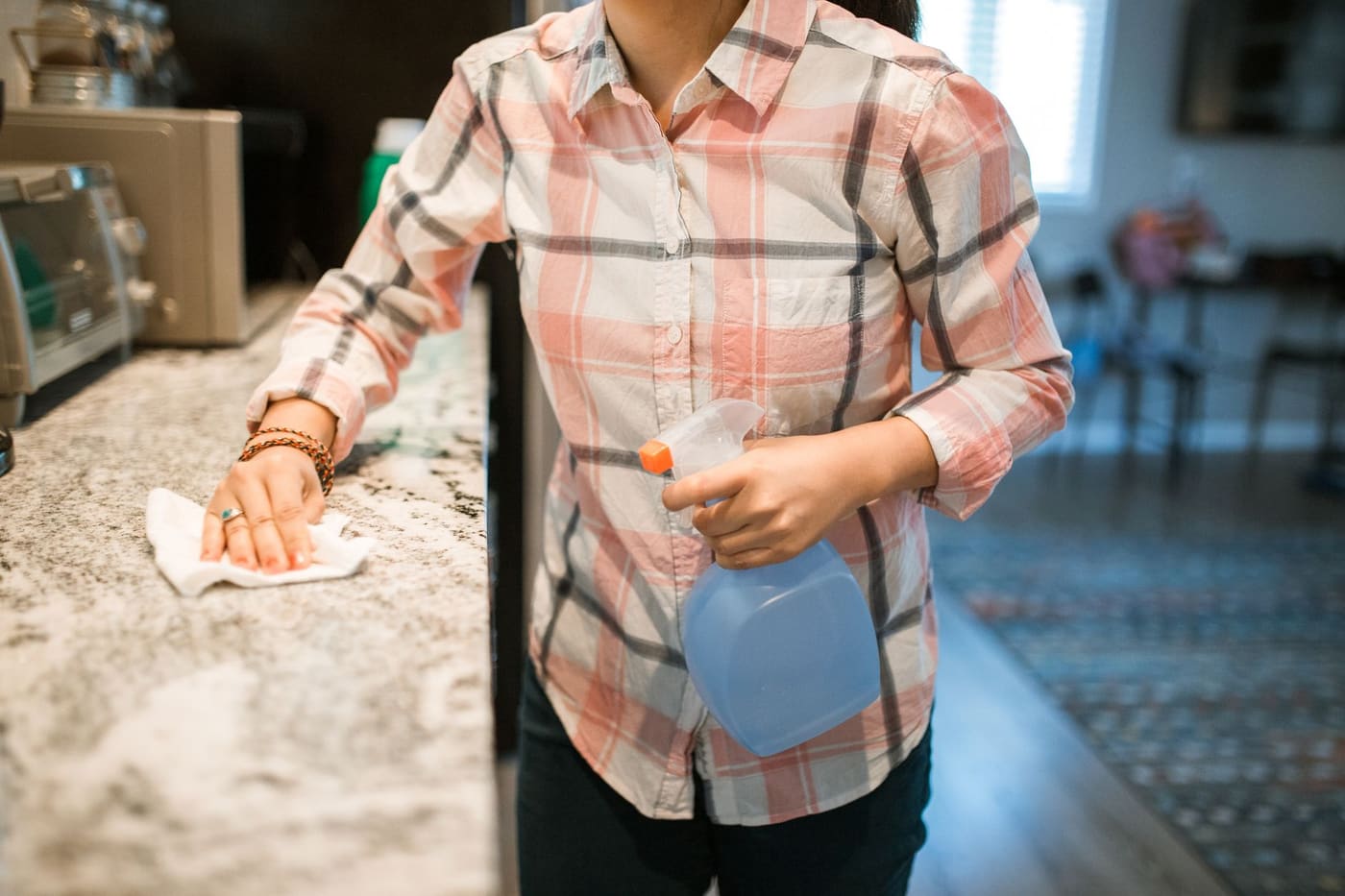
You keep an apartment clean without deep cleans by doing a 10 to 15 minute daily reset, one small recurring task per day, and a short weekly pass through the high-use spots. Dirt and clutter then never build up enough to require a marathon, and the deep clean shrinks to a quick seasonal job.
Deep cleans are what happens when daily upkeep gets skipped. If grease sits on the stovetop for three weeks, it takes a scrub pad and an hour. If it is wiped after cooking, it takes 20 seconds. The goal is to make small tasks so easy and so routine that you do them without a decision. The plan below is built for apartments, where space is tight and every mess shows.
Why deep-clean-only cleaning fails
A big cleaning day depends on having energy, time, and motivation at the same moment. That rarely happens. When it does not, the mess grows, the job gets bigger, and the bigger job is harder to start. The apartment spends most of the month in a “behind” state.
Small, frequent tasks work better for three reasons:
- Fresh messes are easier to remove. Wet spills wipe up, but dried-on spills need soaking and scrubbing.
- Short tasks fit into existing routines, like coffee brewing or a pot boiling.
- Visible progress each day makes the habit self-reinforcing.
If your apartment seems to get messy within a day or two no matter what you do, the cause may be structural. The article on why your apartment gets messy so fast covers landing zones and storage problems that no cleaning schedule can fix alone.
The daily reset: 10 to 15 minutes
A reset is not cleaning. It is returning the apartment to a baseline. Do it at the same time each day, such as right after dinner, and set a timer.
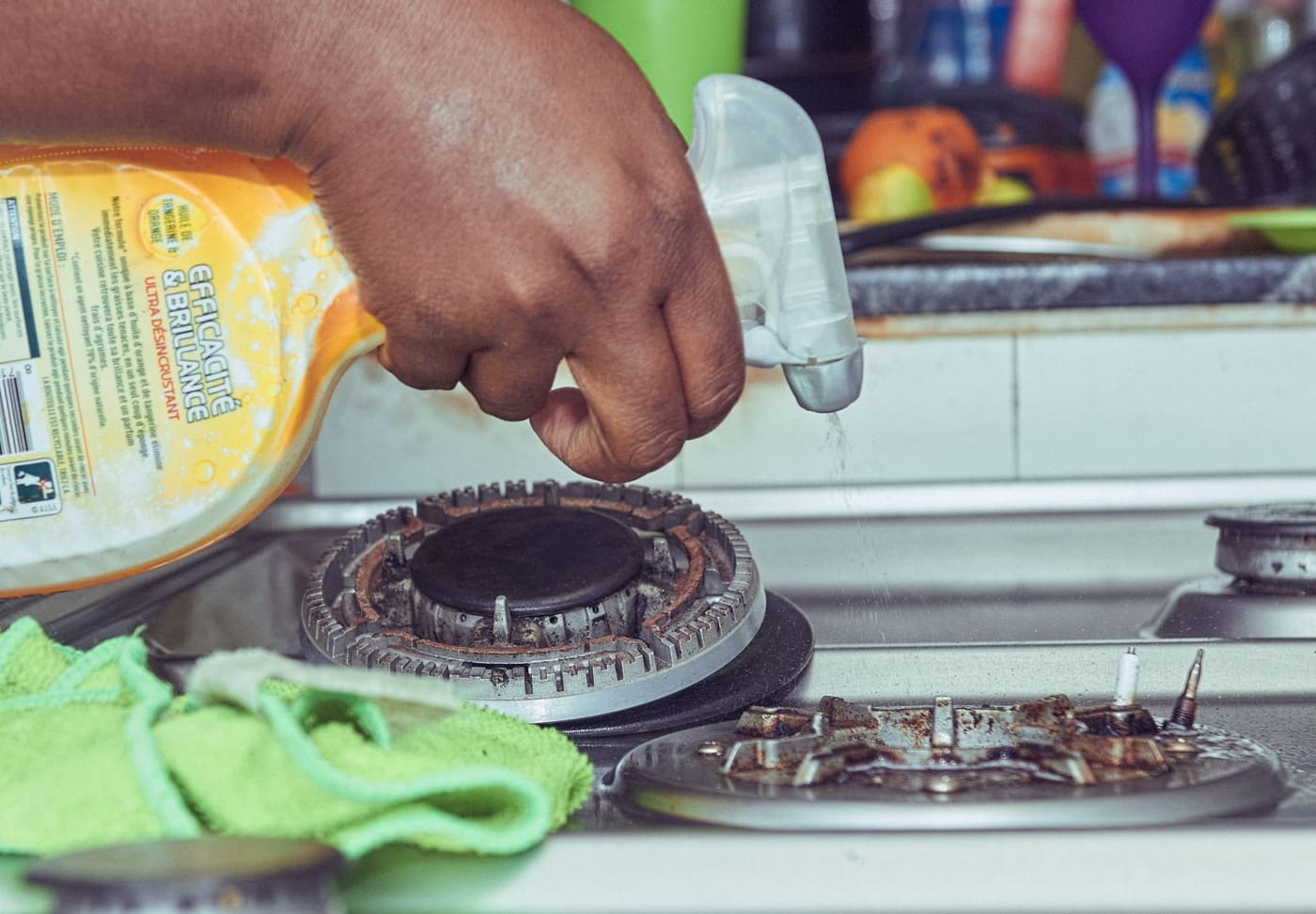
- Dishes: Wash, or load and run the dishwasher. Empty the sink and wipe it down.
- Kitchen counters and stovetop: Wipe with a damp cloth and a drop of dish soap. Wipe the stovetop only when it is cool.
- Floor items: Put away shoes, bags, and laundry.
- Surfaces: Return items to their homes on the table, couch, and nightstand.
- Trash check: Take out the trash if it is full or has food in it.
- Bed: Make it, or at least straighten the top layer. It takes a minute and changes how the whole room looks.
When you finish, stop. The point is that the reset is short enough to do when you are tired.
The one-task-a-day rotation
Instead of a weekly cleaning block, assign each day a single 10 to 20 minute task. A sample rotation:
| Day | Task | Typical time |
|---|---|---|
| Monday | Bathroom sink, counter, and mirror | 10 min |
| Tuesday | Toilet and shower or tub wipe-down | 15 min |
| Wednesday | Vacuum or sweep high-traffic areas | 15 min |
| Thursday | Dust surfaces and wipe door handles, light switches | 10 min |
| Friday | Kitchen: fridge shelf wipe-down, microwave | 15 min |
| Saturday | Mop hard floors, change bedding if due | 20 min |
| Sunday | Laundry catch-up and a plan for the week | Varies |
Adjust the order to your life. If you are skipping days, drop to two or three tasks a week instead of quitting completely. A partial routine still beats none.
Keep supplies where you use them
A big reason cleaning gets delayed is friction. If the spray is under the kitchen sink and the cloth is in a closet across the apartment, you will not wipe up that splash.
Stock small caddies:
- Kitchen: An all-purpose cleaner, a few microfiber cloths, a scrub sponge, and dish soap near the sink.
- Bathroom: A bathroom cleaner, a toilet brush, and a cloth or squeegee in or near the shower.
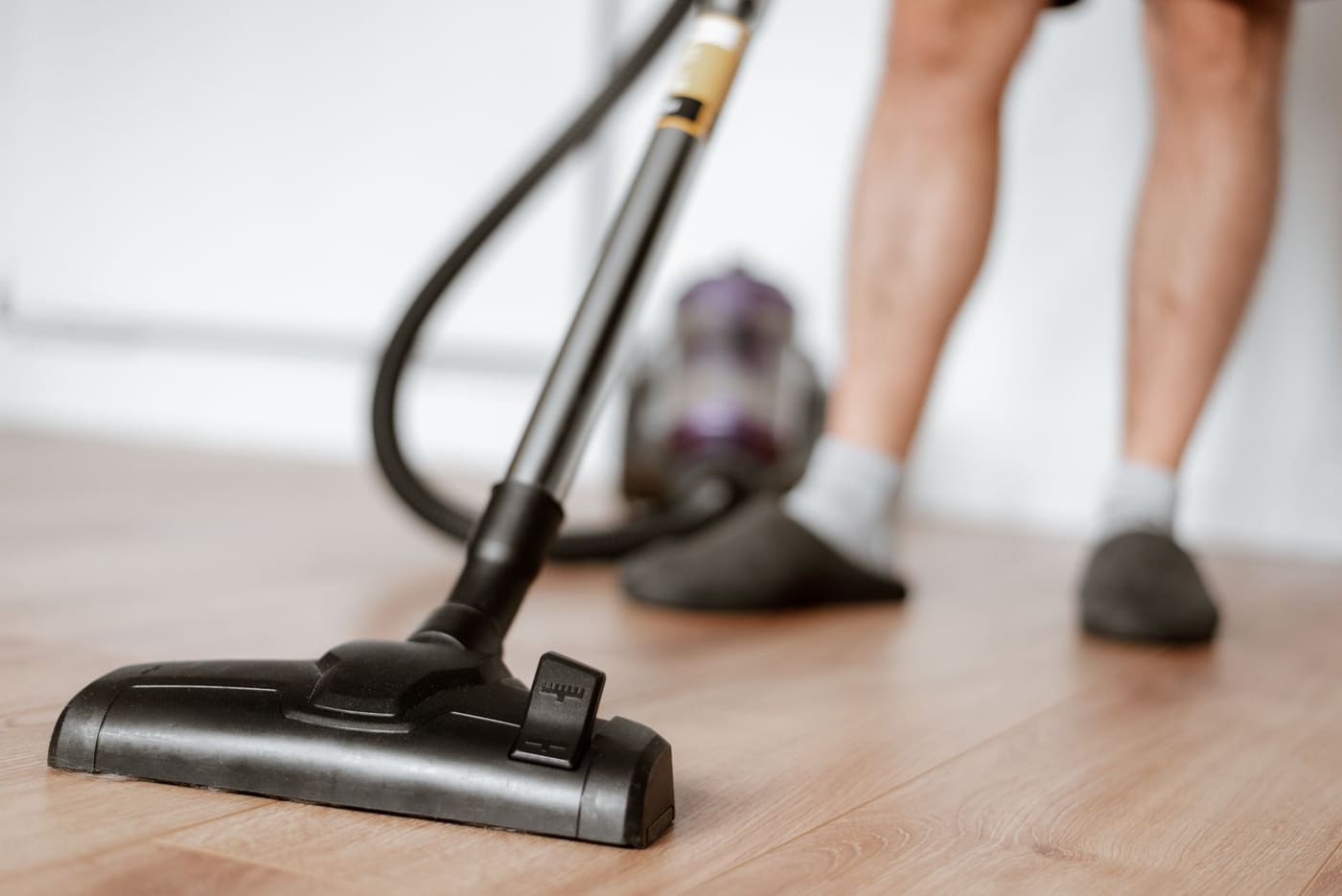
- Main living area: A handheld vacuum or a lightweight stick vacuum stored in a spot you can reach in 5 seconds.
A basic stick vacuum typically costs $100 to $300. A cordless handheld model for crumbs often runs $30 to $80. For small apartments, either one saves time because you do not have to haul out a large machine.
Cleaning product safety
Never mix bleach with ammonia or with acids such as vinegar or toilet bowl cleaners. These combinations release toxic gases. Use one product at a time, rinse surfaces between products, open a window or run the bathroom fan, and wear gloves with stronger cleaners. Store products out of reach of children and pets.
Prevent mess so there is less to clean
The easiest dirt to clean is the dirt that never arrives. A few small changes reduce how often you need to clean:
- Doormat inside and outside: It catches some of the grit and moisture that would otherwise end up on your floor.
- Shoes off at the door: A tray or mat keeps floors drier and cleaner.
- Splatter guard or lid: Cuts grease on the stovetop and backsplash.
- Shower squeegee: Spend 30 seconds after each shower to remove water, which helps limit soap scum and mineral buildup.
- Bathroom fan: Run it during and for a while after showers (about 20 minutes is a common suggestion) to cut humidity, which helps limit mildew.
- Lidded hamper and trash can: Keep laundry and garbage contained.
Cutting down on stuff also helps. Fewer items on shelves and counters means fewer things to dust around. The guide to organization systems that work in small apartments shows how to set up storage that makes the reset faster.
What to do once a month or season
Even with good habits, some tasks need occasional attention. Keep these short and spread them out rather than saving them all for one day:
- Wipe the inside of the refrigerator and check for expired food. Do this the night before trash pickup.
- Wash or replace shower curtain liners if they show mildew.
- Wipe baseboards and the tops of doors with a damp cloth.
- Run a descaling or cleaning cycle in the dishwasher and washing machine as directed in the manual.
- Vacuum under the bed and couch.
- Wash pillows, throws, and curtains per care labels.
The EPA’s mold guidance says a small area of mold, under about 10 square feet (roughly a 3 by 3 foot patch), can usually be cleaned from hard surfaces with detergent and water while wearing gloves, goggles, and an N-95 mask, then dried completely. Larger areas, mold that keeps returning, mold from sewage or contaminated water, or mold hidden behind walls or in the HVAC system call for a professional, and anyone with health concerns should check with a health professional first. In a rental, tell your landlord or property manager in writing either way, since a moisture source may need repair. Lease terms and local law vary on who handles remediation. In buildings built before 1978, do not sand or scrape old painted surfaces, because older paint may contain lead. Wet-wipe dust only and ask your landlord about testing if paint is chipping.
Make it stick
Habits last when they are tied to something you already do. Some pairings that tend to work:
- Wipe the counters while the coffee brews.
- Do dishes while the evening show loads or while a podcast plays.
- Clear the surfaces while you wait for food to heat.
- Run a 10-minute timer on a playlist and stop when the music ends.
Do not aim for perfection. If you miss a day, do the minimal version.
Another useful approach is to keep a short list of “priority zones” that, if clean, make the whole apartment feel clean: the kitchen sink and counter, the bed, the floor, and the bathroom sink. When time is short, do only those four. They have the highest visual payoff.
When life gets busy
Routines break during travel, illness, or a heavy work week. Plan a minimum version for those periods: dishes done, trash out, and one pass of the floor path from the door to the bed. That takes about five minutes and prevents the backlog that leads to a deep clean. If your apartment is still hard to maintain, check whether storage or clutter is the real issue by reading why your apartment gets messy so fast, and consider renter-friendly upgrades that make cleaning easier, such as a good mat at the entry and a lightweight vacuum. After a rough week, restart with the daily reset and skip the guilt.
To set up a simple rhythm, use the small-space cleaning schedule.
Where this comes from
The mold guidance comes from the US Environmental Protection Agency’s advice on mold cleanup in the home. The product-mixing warning reflects widely published consumer safety guidance on household chemicals. The daily reset, task rotation, and habit pairing are common-sense routines, not tested programs, so adjust them to your schedule. Prices are rough US ranges and change, so check current prices before you buy.